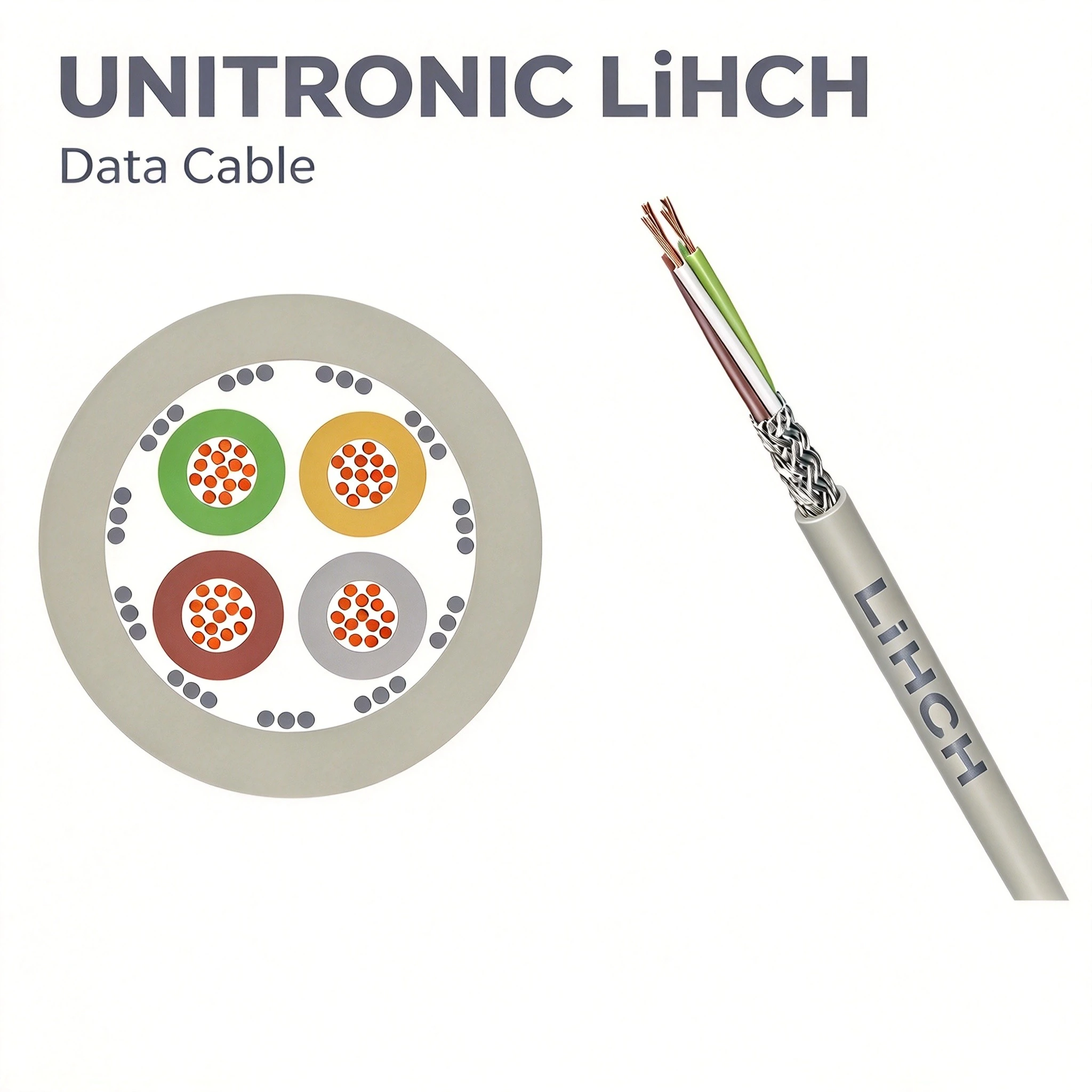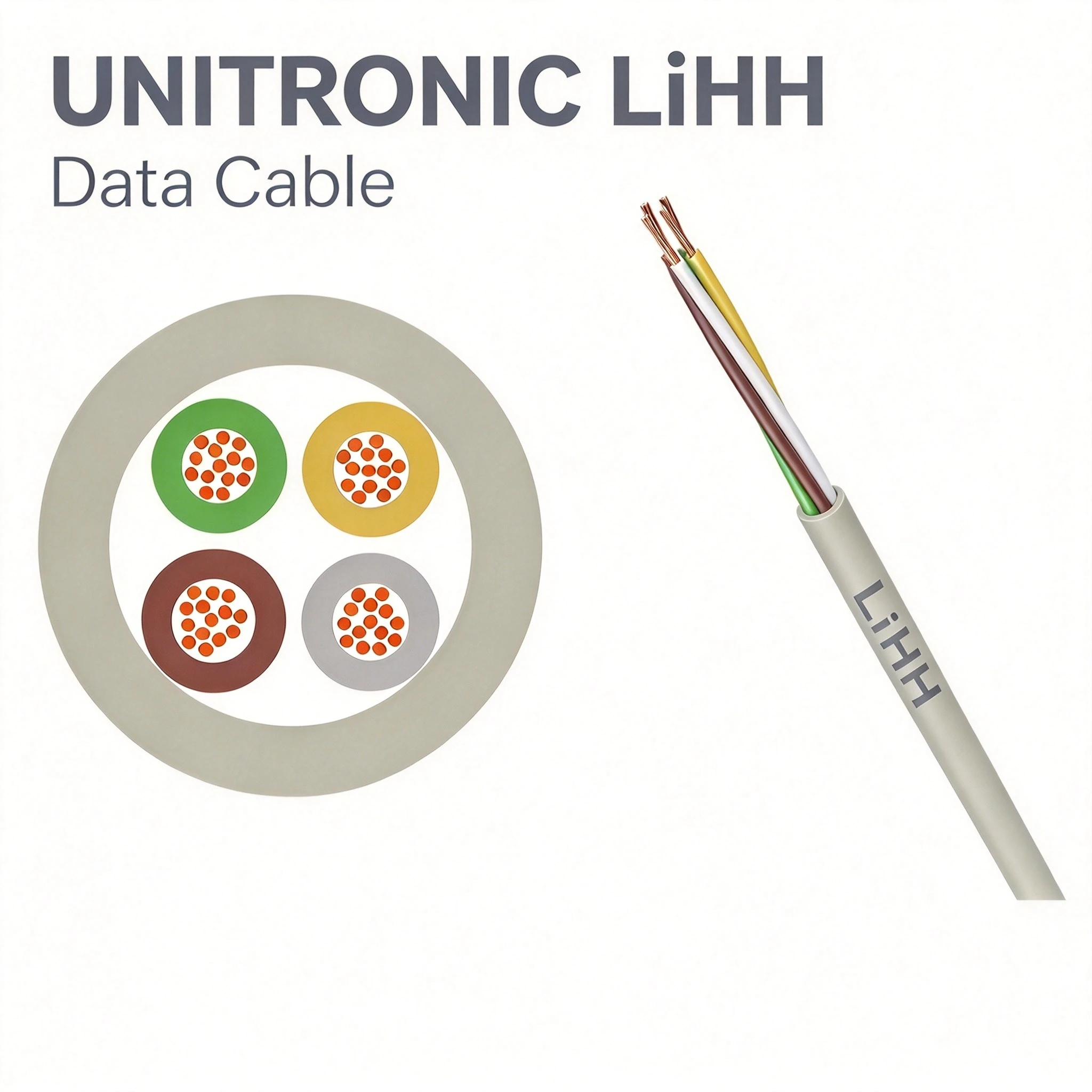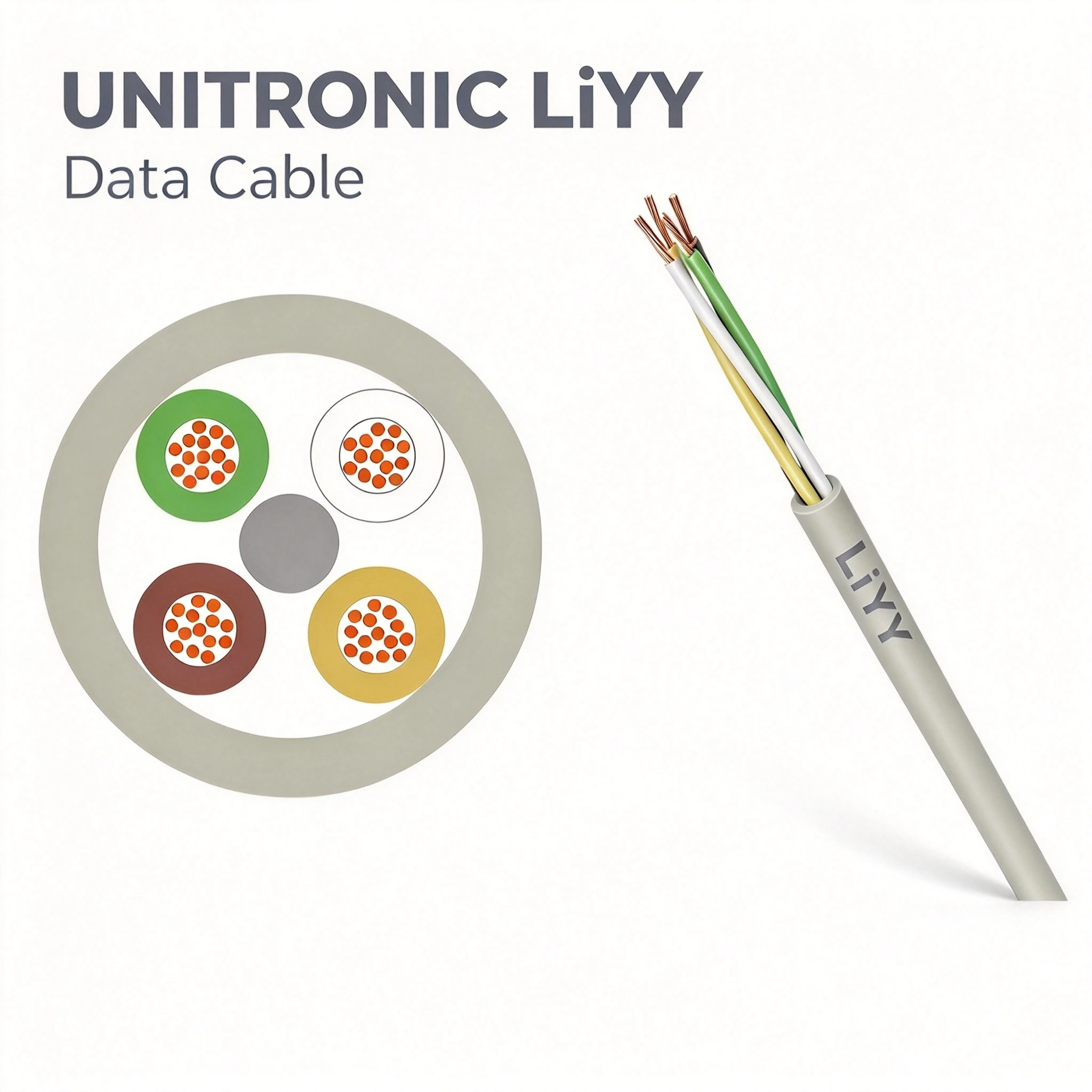
Xiamen Kabasi Electric Co., Ltd. is one of the most reliable manufacturers and suppliers of unitronic liyy data cable in China. If you're going to buy bulk durable cables made in China, welcome to get pricelist from our factory. All customized cables are with high quality and competitive price.
Lead Paragraph
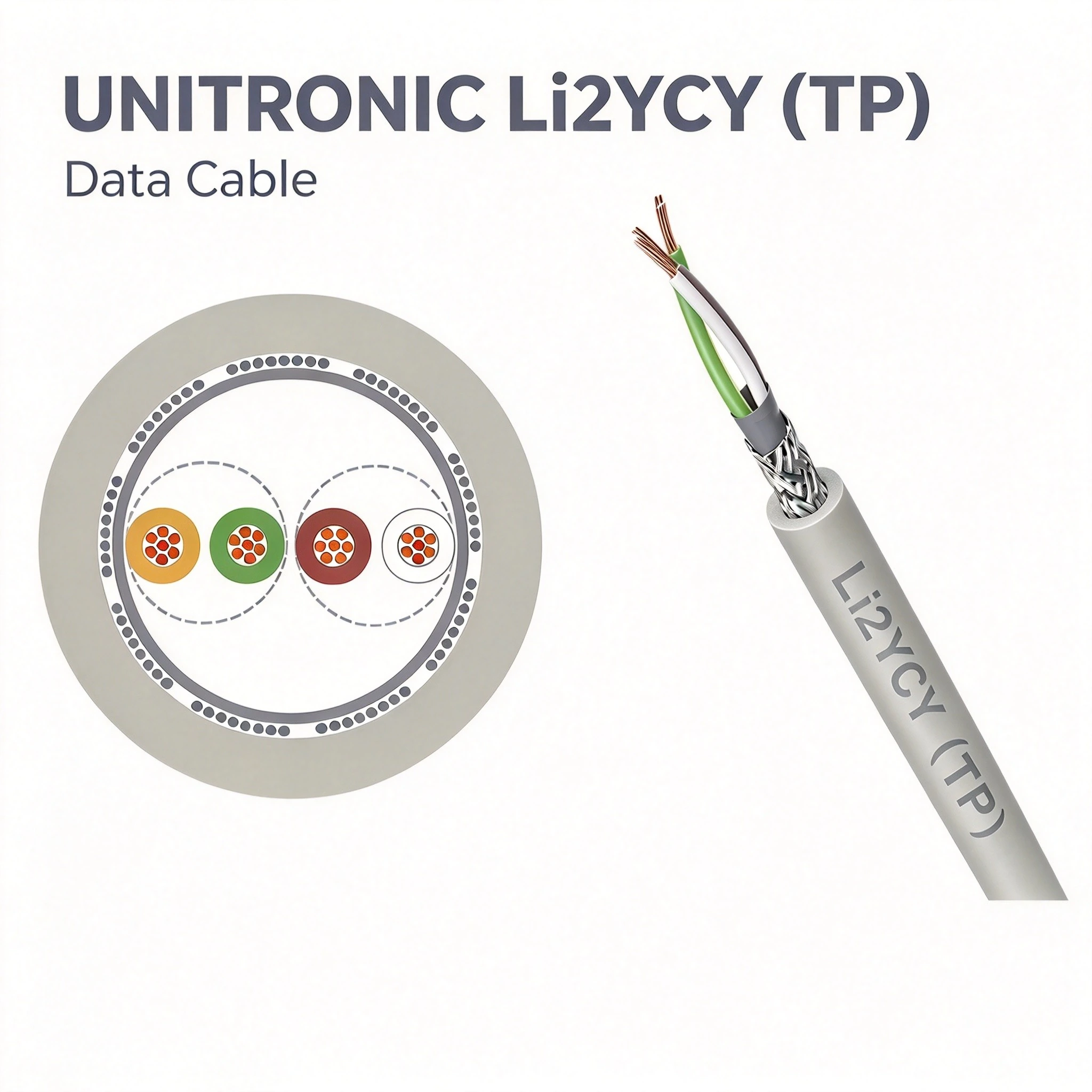
UNITRONIC LiYY is the base-model choice when the wiring stays inside equipment, cabinets or similar indoor installations, many individually identifiable conductors are needed, the route is fixed or only moved occasionally, and the electromagnetic environment does not require an overall screen. Look at LiYCY instead when the route passes close to drives, contactors, welding equipment or another significant noise source, or when the signal is sensitive enough that an overall screen is required; LiYCY is the screened sibling and keeps the same DIN 47100 core-colour concept.
Typical Applications

Computer and Controller Cabinets
Inside the cabinet the run goes from interface card to terminal block, and the job is keeping every conductor identifiable rather than carrying power - the DIN 47100 colours do that without printed numbers.

Weighing Instruments
A weighing instrument puts a load-cell signal on a handful of small cores, and the unscreened PVC construction keeps the outside diameter small enough for the housing it has to pass through.

Electronic Control Equipment
Control gear is wired point to point inside its own housing and stays put once it is built, which is the fixed installation this cable is rated for; the fine-strand conductor is what makes those short bends easy to dress.

Office Machines
An office machine harness is a lot of conductors in a very small space, which is what the 0.14 mm² sizes and the compact overall diameter are there for.
Why Choose This Series
UNITRONIC LiYY is the answer when the problem is conductor count and identification inside a piece of equipment, not motion. It goes into computer and controller cabinets, electronic control gear, office machines and weighing instruments. The unscreened PVC construction keeps the outside diameter down, and the DIN 47100 colours let an installer trace a core without printed numbers.
FAQ
Q: What does LiYY identify?
A:LiYY is a low-frequency data cable: Li for the stranded data construction, YY for PVC insulation and a PVC sheath. It is wired for control and signal circuits, not for Ethernet or other high-speed networking.
Q: Why use DIN 47100 core colours?
A: The fixed colour sequence makes individual conductors easier to identify in multi-core wiring and reduces the need to trace every core by continuity testing during panel work.
Q: How many cores and sizes are available?
A: The range runs from 2 to 56 cores over 0.14 to 1.50 mm². The high core counts sit in the small cross-sections - 56 cores at 0.14 mm², 3 cores at 1.50 mm².
Q: When should I move from LiYY to LiYCY?
A: When the route passes close to drives, contactors or welding equipment, or when the signal is weak enough that an overall screen is needed. LiYCY is the same core construction and the same DIN 47100 colours, with a tinned-copper braid over it.
Q: Can LiYY run in a drag chain or robot axis?
A: No. LiYY is rated for fixed installation and occasional movement, not for continuous travel in a drag chain or on a robot axis. Use a cable built for continuous flexing.
Q: How is LiYY supplied?
A: Coils up to 30 kg or 250 m, longer lengths on drums. State the packaging when ordering - for example 1 × 500 m drum or 5 × 100 m coil.
Hot Tags: unitronic liyy data cable, China unitronic liyy data cable suppliers
Specifications
|
Parameter |
Value |
|
Core identification |
DIN 47100 colour code |
|
Conductor |
Multi-strand fine bare copper (0.34 mm²: 7 strands) |
|
Core insulation |
PVC |
|
Core lay-up |
Cores stranded in layers |
|
Outer sheath |
PVC, light grey RAL 7032 |
|
Cross-section range |
0.14 – 1.50 mm² |
|
Core count range |
2 – 56 cores |
|
Mutual capacitance |
approx. 120 nF/km |
|
Inductance |
approx. 0.65 mH/km |
|
Min. bending radius - fixed installation |
4 × O.D. |
|
Min. bending radius - moving application |
10 × O.D. |
|
Temperature - fixed installation |
-40 °C to +80 °C |
|
Temperature - moving application |
-5 °C to +70 °C |
|
Flame retardancy |
IEC 60332-1-2 |
|
Approval |
Based on VDE 0812 |
How the AWG Column Was Produced
For every metric conductor size listed, the nearest standard AWG area was selected under IEC 60228 nearest-area matching. The column is a comparison aid only — cable manufactured to AWG dimensions will not necessarily interchange with the metric item, and the reverse also applies. Name the AWG size on your drawing and we will confirm the closest metric article we hold.
Metric → AWG at a glance
0.14→26 / 0.25→23 / 0.34→22 / 0.50→20 / 0.75→18 / 1.00→17 / 1.50→15
UNITRONIC LiYY — Part Number Table
|
Part No. |
Cores × mm² |
AWG |
OD (mm) |
Cu (kg/km) |
Weight (kg/km) |
|
0028202 |
2 × 0.14 |
26 |
3.2 |
2.70 |
13 |
|
0028203 |
3 × 0.14 |
26 |
3.4 |
4.05 |
16 |
|
0028204 |
4 × 0.14 |
26 |
3.6 |
5.40 |
19 |
|
0028205 |
5 × 0.14 |
26 |
3.9 |
6.72 |
22 |
|
0028207 |
7 × 0.14 |
26 |
4.2 |
9.50 |
28 |
|
0028208 |
8 × 0.14 |
26 |
4.9 |
10.20 |
35 |
|
0028210 |
10 × 0.14 |
26 |
5.2 |
13.50 |
41 |
|
0028212 |
12 × 0.14 |
26 |
5.6 |
16.20 |
48 |
|
0028214 |
14 × 0.14 |
26 |
5.8 |
18.90 |
53 |
|
0028216 |
16 × 0.14 |
26 |
6.1 |
21.60 |
59 |
|
Part No. |
Cores × mm² |
AWG |
OD (mm) |
Cu (kg/km) |
Weight (kg/km) |
|
0028220 |
20 × 0.14 |
26 |
7.0 |
27.00 |
71 |
|
0028225 |
25 × 0.14 |
26 |
7.8 |
33.60 |
87 |
|
0028236 |
36 × 0.14 |
26 |
8.6 |
48.60 |
127 |
|
0028237 |
37 × 0.14 |
26 |
8.9 |
49.70 |
118 |
|
0028240 |
40 × 0.14 |
26 |
9.3 |
54.00 |
139 |
|
0028250 |
50 × 0.14 |
26 |
10.4 |
67.50 |
171 |
|
0028256 |
56 × 0.14 |
26 |
10.7 |
78.40 |
187 |
|
0028302 |
2 × 0.25 |
23 |
3.8 |
4.80 |
18 |
|
0028303 |
3 × 0.25 |
23 |
4.0 |
7.20 |
22 |
|
0028304 |
4 × 0.25 |
23 |
4.3 |
9.60 |
26 |
Note: the 37-core 0.14 mm² item (0028237) is listed at 118 kg/km while the 36-core item (0028236) is listed at 127 kg/km; the copper weights rise in the expected direction, so the 37-core cable weight should be confirmed against the current Lapp data sheet before publishing.