

Xiamen Kabasi Electric Co., Ltd. is one of the most reliable manufacturers and suppliers of ethernet profinet cable - type a b c r in China. If you're going to buy bulk durable cables made in China, welcome to get pricelist from our factory. All customized cables are with high quality and competitive price.
Lead Paragraph
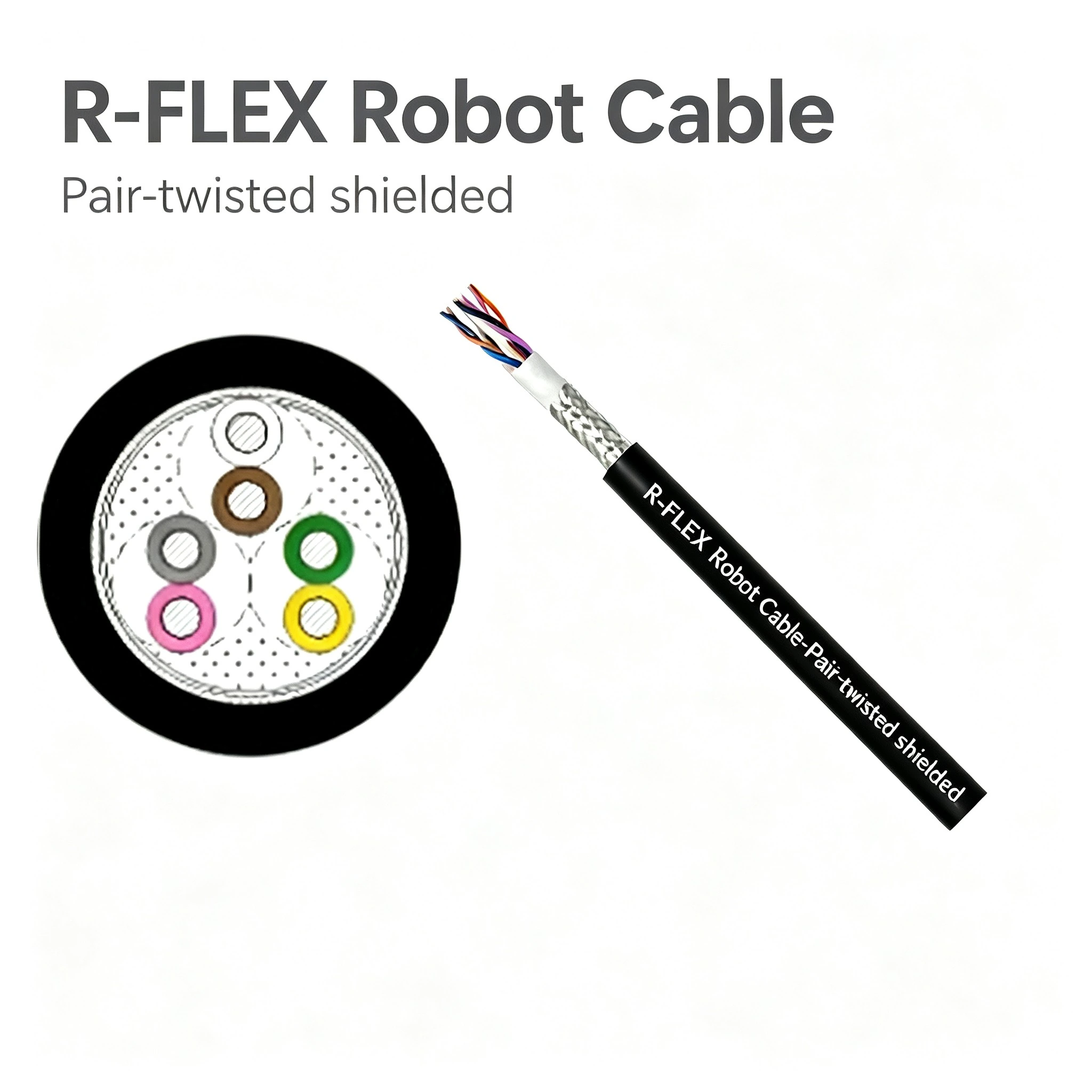
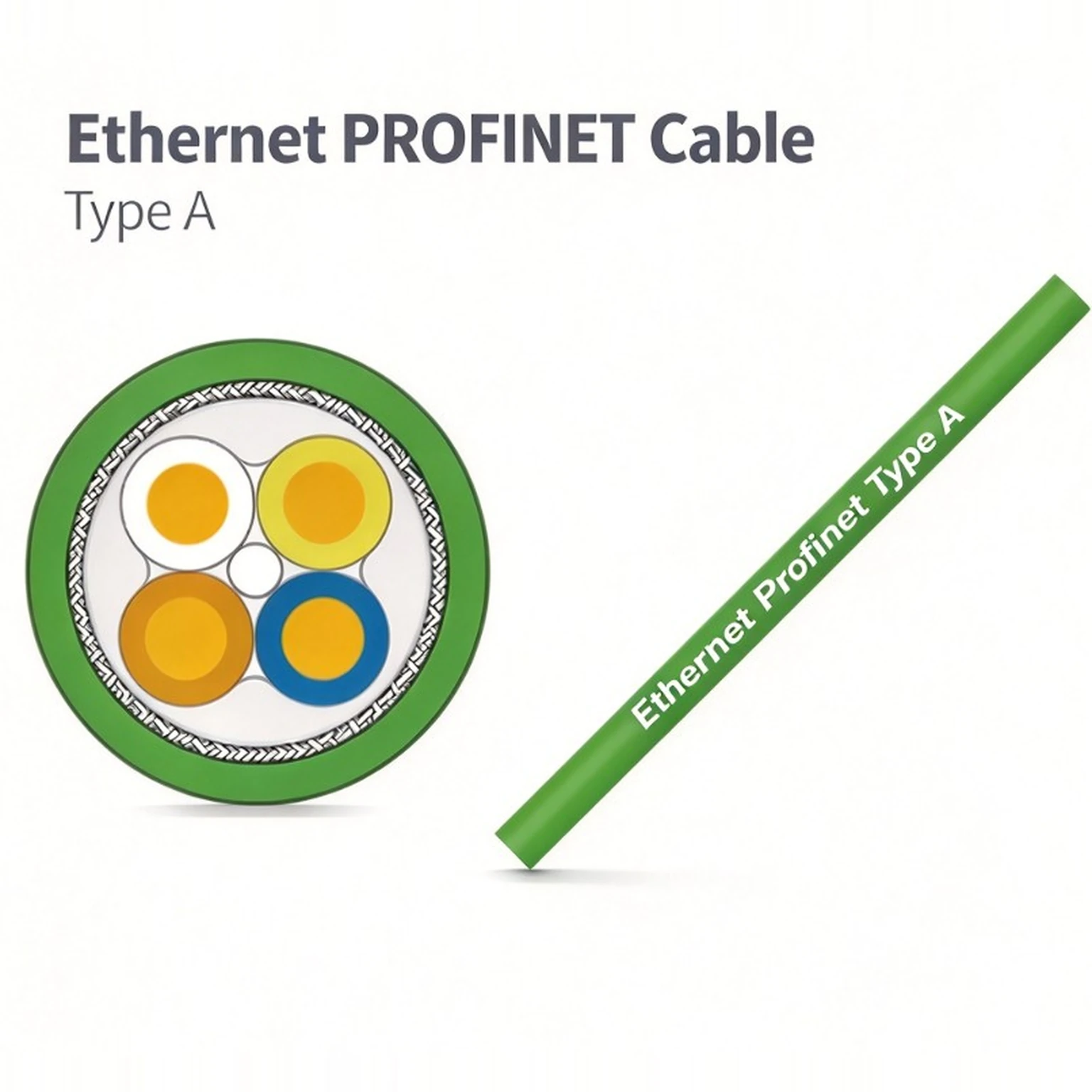
The PROFINET cable range answers one question four times: how much movement will the run see? The answer is built into the conductor. Type A is a solid conductor, which suits a run that is installed once and left alone. Type B moves to 7-strand conductors and adds resistance to oil, ultraviolet light and low temperature. Type C goes to 19-strand conductors and is the range's answer for drag chains and frequently moving axes. Type R keeps the 19-strand conductor but pairs an FRNC inner jacket with a PUR outer jacket for the three-dimensional motion of industrial robots. Everything else holds across the family: PROFINET with CAT5e performance, 100 ±15 Ω, a 2000 V/min (AC) test level, −40 °C to +80 °C, PE insulation, cores in white, yellow, blue and orange, aluminium foil with a tinned copper braid, and a green jacket at approximately RAL 6018.
Select Your Variant - How the Four Types Divide
There is only one axis worth reading first, and it is the conductor: 1 strand, 7 strands, 19 strands. The strand count is what fixes how much the cable can be moved, and every other difference follows from it - the jacket materials, the jacket count and the price of the copper.
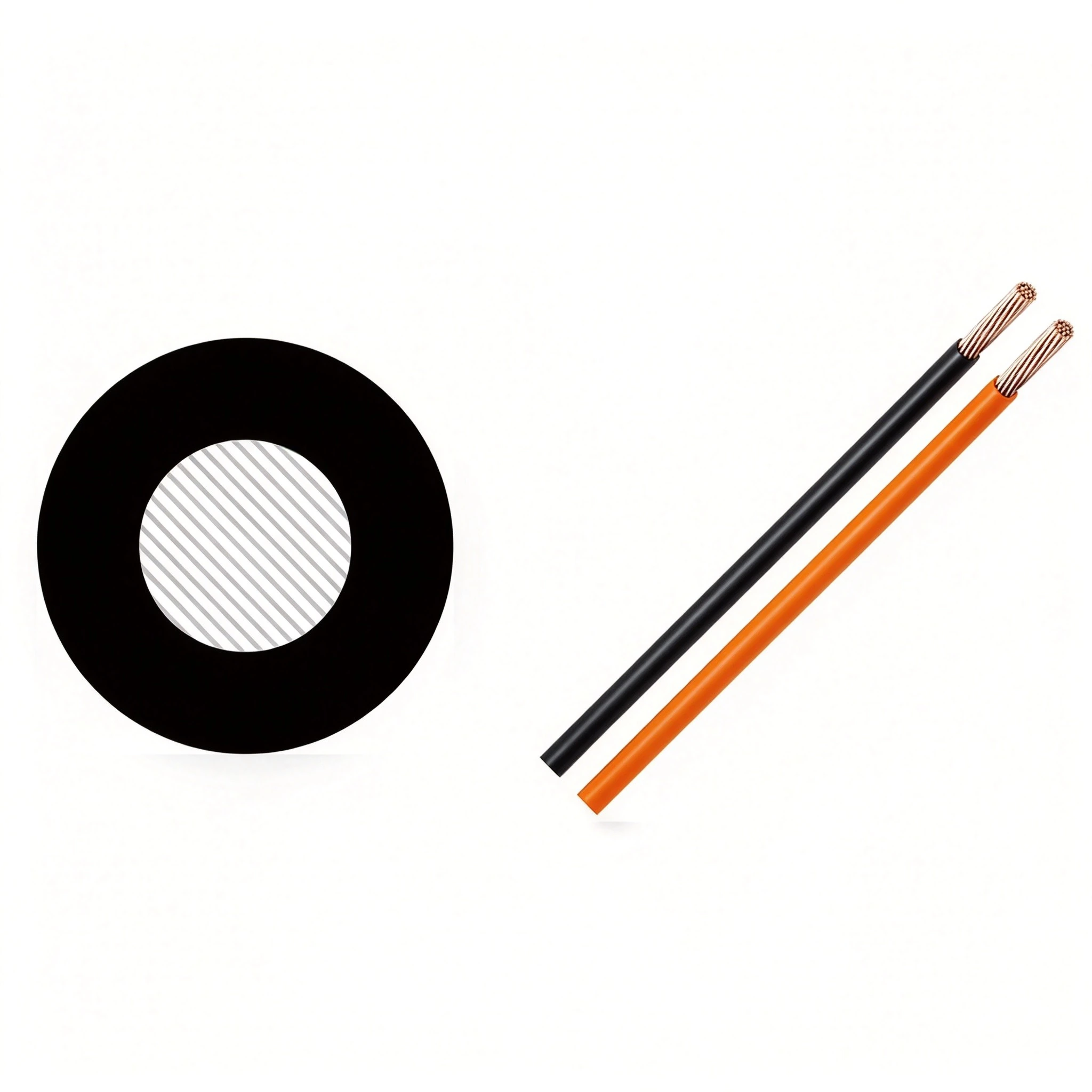
- Type A - solid conductor, 1X4X22AWG/1. One strand per core and a PVC jacket inside and out. This is the fixed installation type: a run that is laid once and not moved afterwards.
- Type B - 7-strand, 1X4X22AWG/7. Two jacket combinations, PVC over PVC or NHFR inside with a TPU outside. Built for fixed applications, and the only type in the range that also carries oil, UV and low-temperature resistance.
- Type C - 19-strand, 1X4X22AWG/19 and 1X4X26AWG/19. Three part numbers: PVC over PVC, FRNC inside with TPU outside, or TPU throughout on the lighter 26 AWG construction at 4.9 mm. This is the drag-chain and frequent-movement type.
- Type R - 19-strand, 1X4X22AWG/19. FRNC inner jacket and PUR outer jacket, and the only type named for the three-dimensional motion of industrial robots.
Two practical notes on reading the list. First, the 26 AWG version of Type C is the only part number in the range below 6.5 mm outside diameter - it is the one to choose where the connector or the gland sets the limit. Second, a rated voltage appears only inside Type C, and only on two of its three constructions: the FRNC/TPU 22 AWG item and the TPU 26 AWG item state 300 V, while the PVC/PVC 22 AWG item states no rated voltage at all. The figure therefore travels with the part number rather than with the type.
Typical Applications
All four types are aimed at the same environment - machines, equipment and instruments, and the wiring of control cabinets - and the range divides that environment by how the cable is asked to move rather than by industry. Four duties cover the range:
Fixed runs on machines, equipment, instruments and control cabinets.
The duty Type A is built for, and the duty every type can serve.

Fixed applications in oil, sunlight or cold.
Where the run is installed and left, but the surroundings attack the jacket, Type B adds oil, UV and low-temperature resistance.
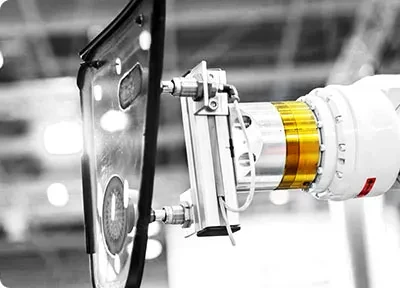
Drag chains and frequently moving axes on machine tools and handling equipment.
The duty Type C is built for, in 22 AWG or the lighter 26 AWG.
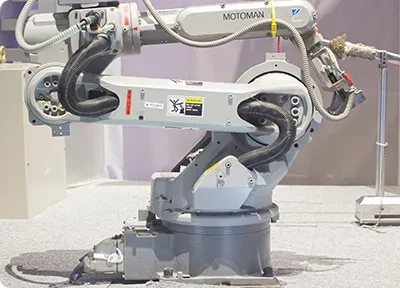
Three-dimensional motion of industrial robots.
The duty Type R is built for, where the cable is not only bent but twisted along its length.
Why Choose the PROFINET Cable Range
One Cable Across Four Motion Classes
The range is not four products that happen to share a name. One construction is offered with its conductor stranding changed to suit the motion, so a machine can be wired from a single family: the fixed panel, the oily fixed run, the drag chain and the robot axis. A spare reel held for one duty serves the others, because the insulation, the four core colours and the screen do not change as the duty rises.
One Screen, Whatever the Activity Level
Aluminium foil over the cores with a tinned copper braid over the foil is the screen on all four types. It is the layer that carries the CAT5e performance and the immunity to external electromagnetic interference, and because it is specified once it can be designed into the panel and the machine rather than re-qualified per axis. The impedance window and the 2000 V/min (AC) test level sit on the same layer and hold across the range.
Jacket Compounds and What Each One Is For
PVC where the environment is inside a cabinet; NHFR or FRNC where flame and smoke behaviour is written into the specification; TPU where the jacket has to resist abrasion in a moving chain; PUR on Type R, where the jacket is also twisted as the axis turns. The compound appears both inside and outside the screen, and the pair is stated per part number, so the jacket system and the conductor are chosen together.
Frequently Asked Questions
Q: Which type do I need for a run that is installed once and left alone?
A: Type A. It has a solid conductor and a PVC jacket inside and out, and it is the fixed installation type of the range. Where the same run also has to survive oil, sunlight or cold, step up to Type B, which keeps the fixed application but changes the conductor to 7-strand and adds oil, UV and low-temperature resistance.
Q: Which type is built for a drag chain?
A: Type C, on 19-strand conductors. It is offered in three part numbers: PVC over PVC and FRNC with TPU at 1X4X22AWG/19, and a TPU construction at 1X4X26AWG/19 with a 4.9 mm outside diameter.
Q: What is the difference between Type B and Type C?
A: The conductor and the duty. Type B is 7-strand, 1X4X22AWG/7, and is built for fixed applications; Type C is 19-strand, so it takes the higher number of bending cycles a frequent-movement run implies. The two also differ in the part numbers behind them - two for Type B, three for Type C.
Q: Are the impedance and the test level the same across the four types?
A: Yes. All four carry a characteristic impedance of 100 ±15 Ω and are tested at 2000 V/min (AC), and all four run from −40 °C to +80 °C. The electrical layer does not change between activity levels; only the conductor, the jackets and the motion duty do.
Q: Is Type R simply a Type C with a different jacket?
A: Both are 19-strand 22 AWG and both sit at 6.5 mm outside diameter, so on the electrical layer they are close. What separates them is the duty written on the type: Type C for drag chains and frequent movement, Type R for the three-dimensional motion of industrial robots, and Type R alone carries the bending-cycle figure of at least 5 million drag-chain cycles. Where the two have to be told apart in a specification, the duty and that cycle count are the lines to quote.
Q: Can the range be supplied as finished assemblies?
A: Yes, and on the same cable rather than a look-alike: the chosen part number is cut and terminated to the drawing, with the connector the application calls for, and the assembly is quoted together with the cable.
Hot Tags: ethernet profinet cable - type a b c r, China ethernet profinet cable - type a b c r suppliers
Ratings Shared Across the Range
| Parameter | Value |
| Applicable standard | PROFINET protocol; performance meets CAT5e |
| Characteristic impedance | 100 ±15 Ω |
| Test voltage | 2000 V/min (AC) |
| Temperature range | −40 °C to +80 °C |
| Minimum bending radius | 8 × OD, on every type |
| Core identification | Up to 5 cores by insulation colour; above 5 cores by white numbers, or per customer requirement |
| Interference and transmission | Good resistance to external electromagnetic interference; superior transmission performance |
| Flame retardancy | Meets the requirements of IEC 60332-1 |
Variant Comparison - Type A, B, C and R
| Layer | Type A | Type B | Type C | Type R |
| ① Conductor | Solid bare copper | Stranded tinned copper | ||
| ② Insulation | PE | |||
| ③ Core colours | White, yellow, blue, orange | |||
| ④ Inner jacket | PVC | PVC or NHFR | PVC, FRNC or TPU | FRNC |
| ⑤ Screen | Aluminium foil with tinned copper braid | |||
| ⑥ Outer jacket | PVC | PVC or TPU | PUR | |
| ⑦ Jacket colour | Green (approx. RAL 6018) | |||
Where Each Type Stops
The limits are set by the conductor and by the motion, and they are worth stating plainly so that a type is not asked to do the next type's job.
- Type A. A solid conductor belongs to a run that does not move. Route it where the cable is laid once; where the run has to flex, move up the range rather than over-bending this type.
- Type B. The jacket system resists oil, UV and low temperature, but the application is still a fixed one, and the bending radius is read on the occasional-movement basis.
- Type C. This is the drag-chain type, in 22 AWG and 26 AWG. The 26 AWG version is the lightest construction in the range at 4.9 mm and 32 kg/km, and it is also the one with the highest DC resistance limit at ≤150 Ω/km - where run length matters, that figure decides.
- Type R. The duty is three-dimensional motion, where the cable twists as well as bends. It is the only type in the range that prints a bending-cycle figure: at least 5 million drag-chain cycles. Its FRNC inner jacket and PUR outer jacket are the range's answer to that duty; it is not offered as a general-purpose substitute for the drag-chain type.