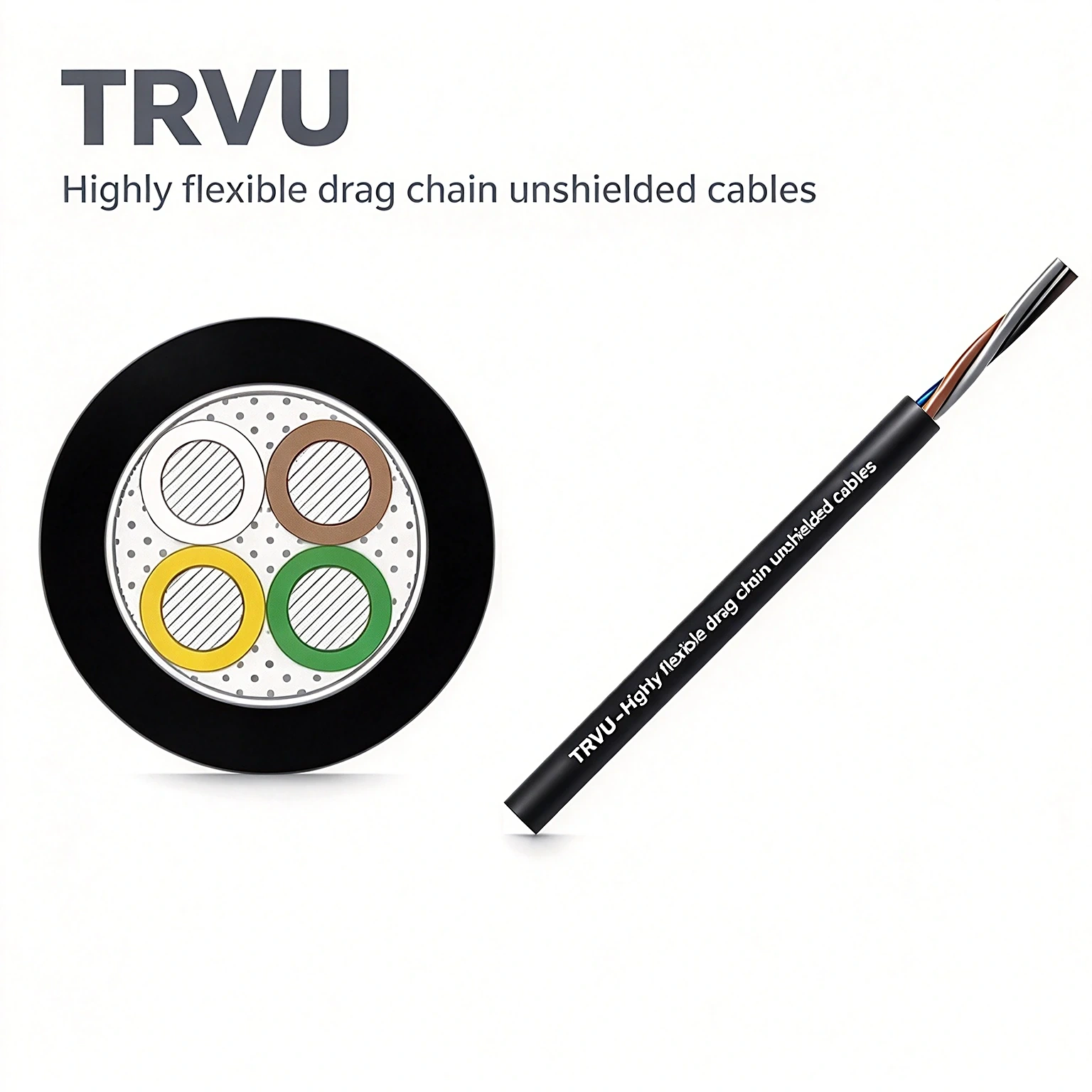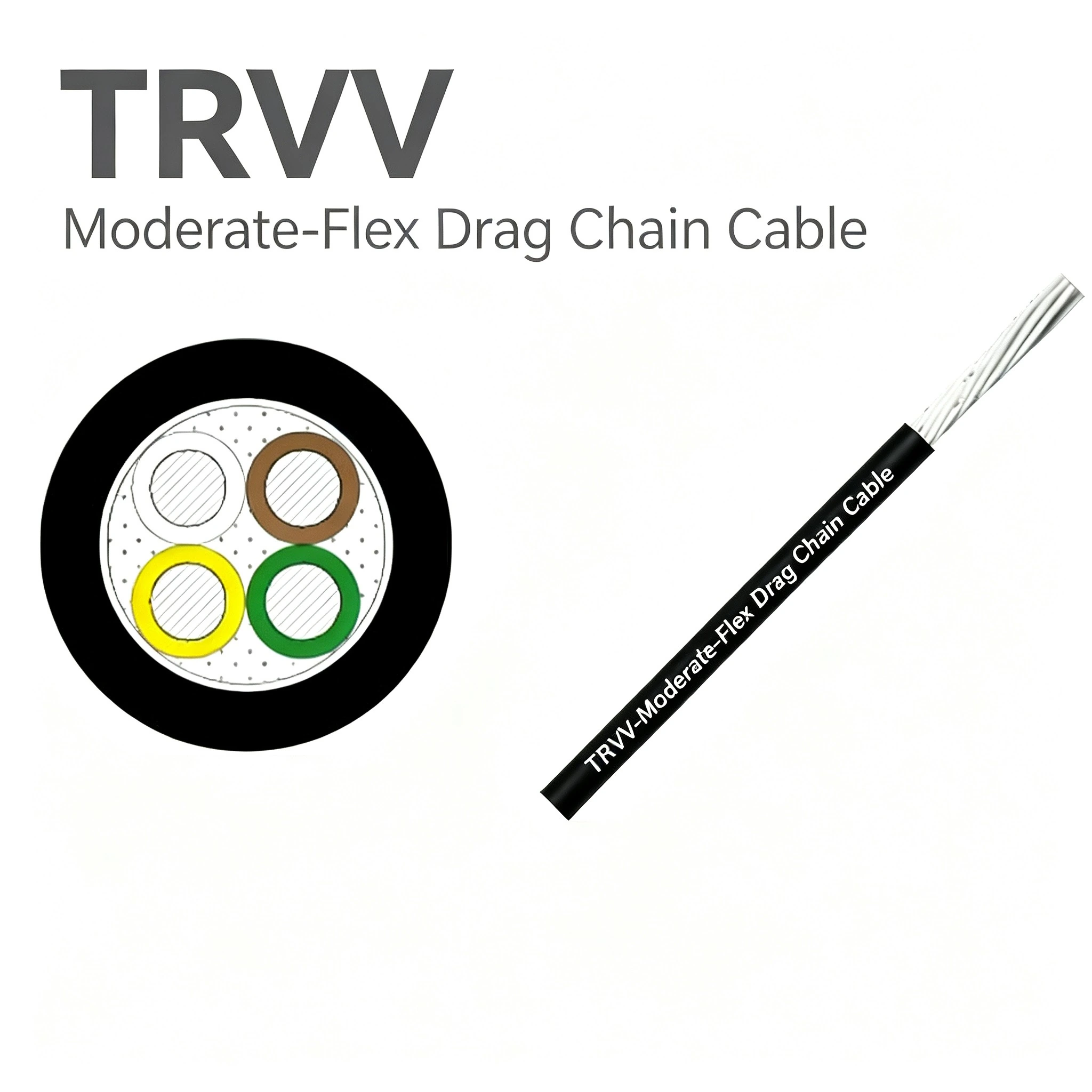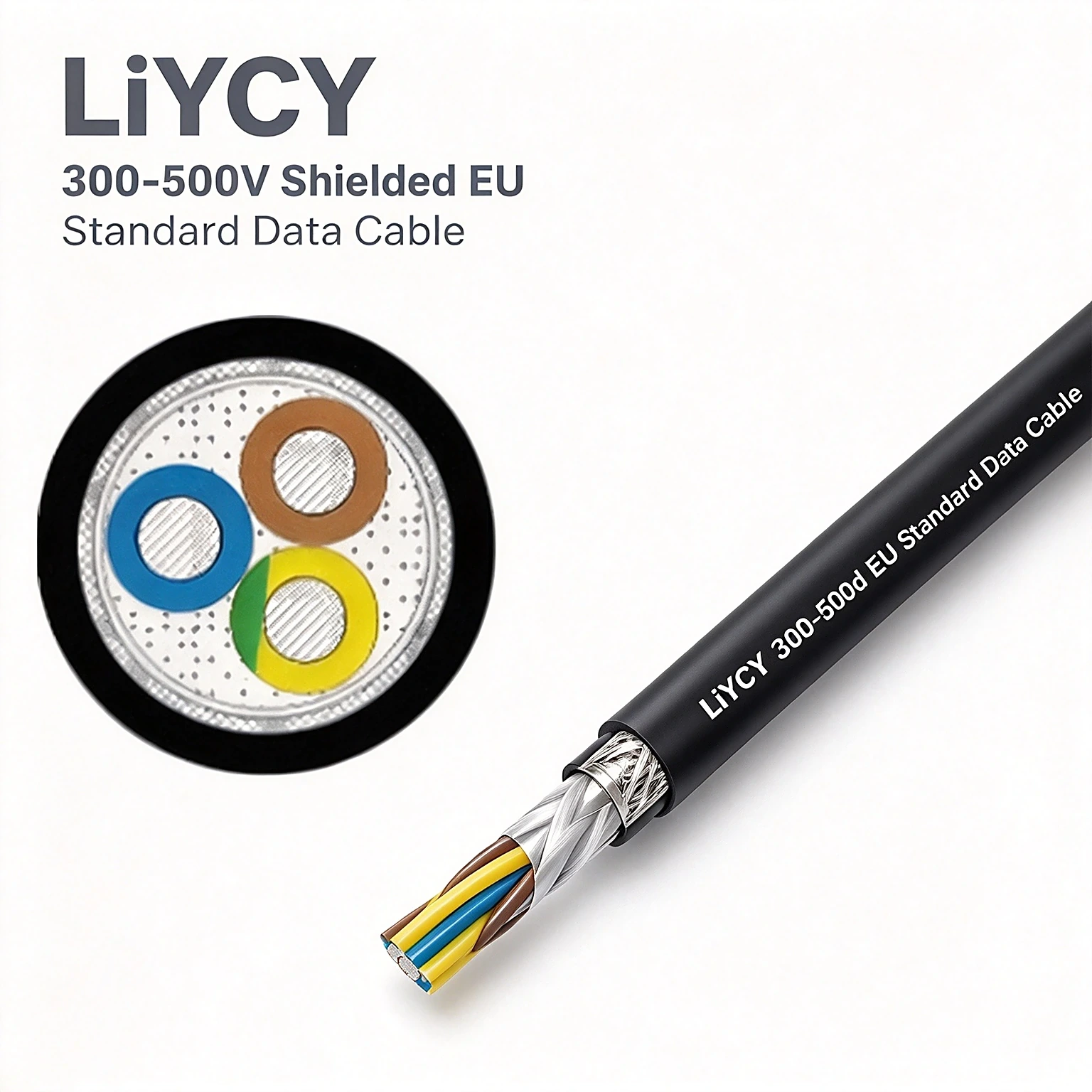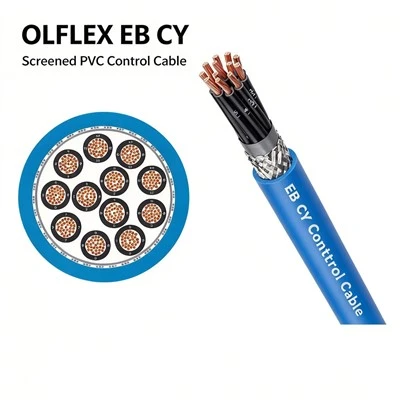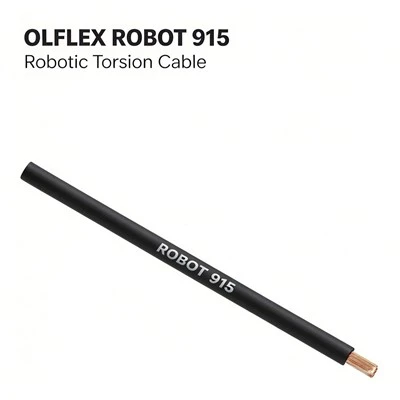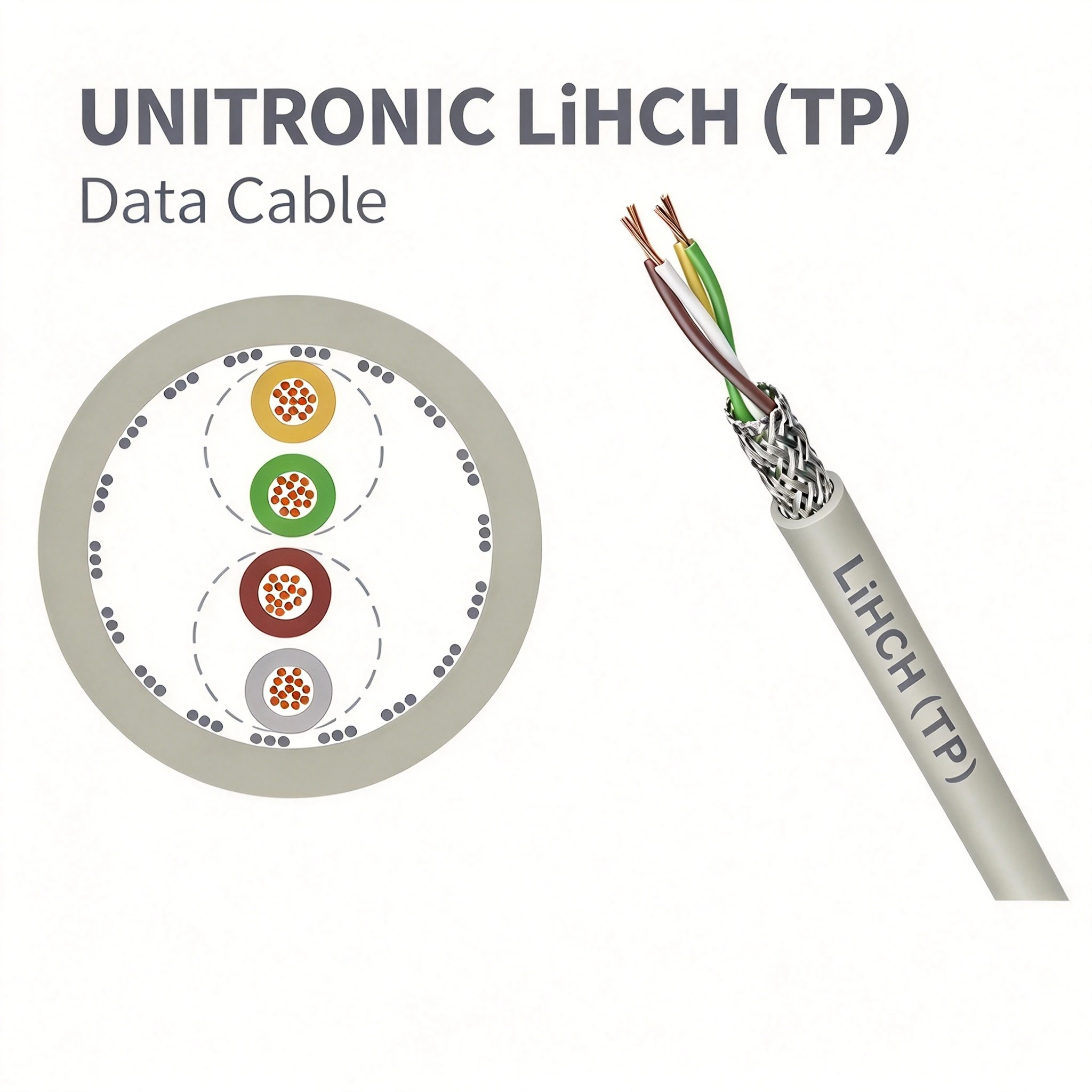

Xiamen Kabasi Electric Co., Ltd. is one of the most reliable manufacturers and suppliers of r-flex robot cable in China. If you're going to buy bulk durable cables made in China, welcome to get pricelist from our factory. All customized cables are with high quality and competitive price.
Lead Paragraph
R-FLEX is the cable that follows a robot arm through its cycle: it bends in a chain, twists at the wrist, and keeps its conductors intact while the machine runs. One construction answers three wiring jobs - a plain build for dense panels and short runs, a braided build where a drive sits alongside, and a pair-twisted braided build where the signal travels as pairs. The conductor, the insulation, the jacket and the mechanical ratings stay the same across all three; only the shield and the way the cores are grouped change, which is why the choice is made in one step rather than three.
Two Choices, Not Three Cable
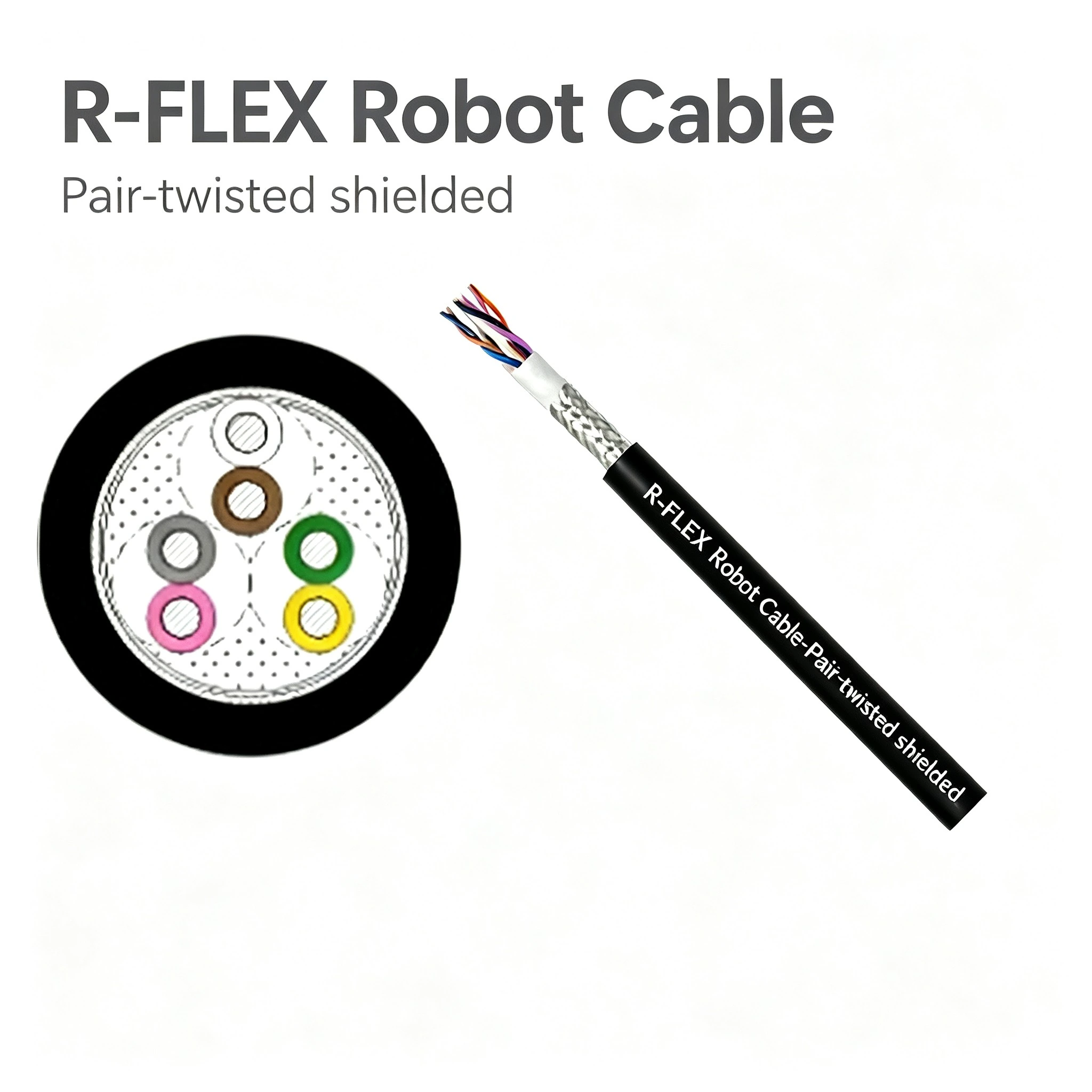
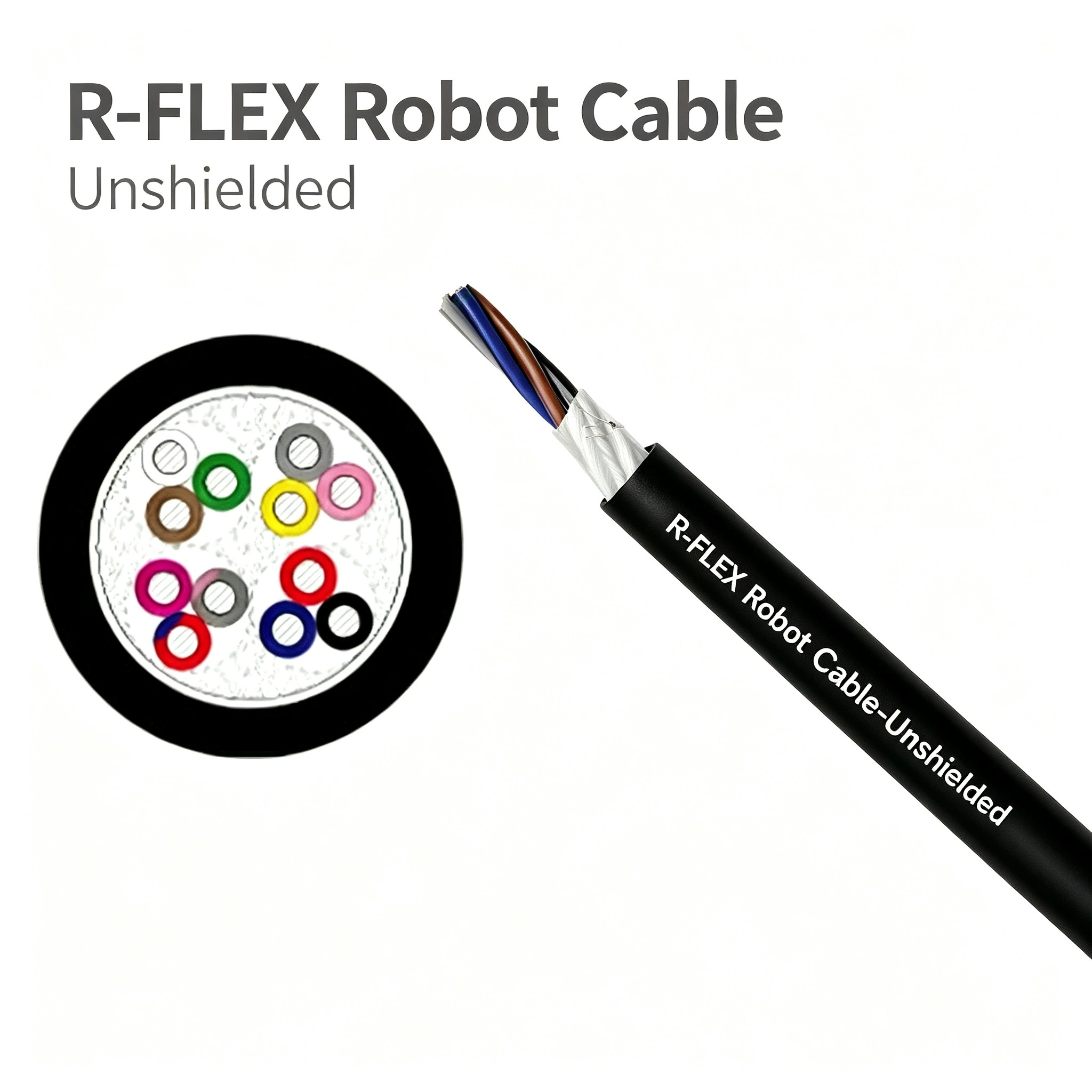
Shielding is the first choice. Where a servo drive, a welding set or a long motor cable shares the duct, a tinned copper braid over the cabled cores keeps switching noise out of the signal; where the run is short and the environment quiet, the unshielded build is lighter, cheaper and easier to bend. Pair twisting is the second. Cores twisted in pairs hold a signal as a loop, so both legs pick up the same disturbance and it cancels; this build is chosen where several signals run together and crosstalk matters. Both options keep the same tinned copper conductor and the same thin elastomer wall, so the electrical and mechanical margins do not move when the build does.
Which Build for Which Run
| Condition | Build | Why |
| Short run in a quiet panel | Unshielded | Lightest and easiest to bend |
| Drive, welding set or long motor cable in the same duct | Shielded | Braid keeps switching noise out of the signal |
| Several signals in one cable, crosstalk matters | Pair-twisted shielded | Twisted pairs cancel what they pick up |
| Long horizontal travel | Any of the three | Rated at 8 × OD |
| Tight three-dimensional chain | Any of the three | Rated at 10 × OD |
| Cell running above +80 °C | Outside this range | Different compound is needed |
Typical Application


Why Specify R-FLEX
One cable through the whole cell
The conductor, the wall thickness and the jacket are the same in all three builds, so an axis is specified once and the build is chosen per run.
Braid where the drive is
A tinned copper braid sits over the cabled cores and takes the switching noise out before it reaches the signal.
Pairs that cancel what they pick up
Twisted pairs see the same disturbance on both legs, so the loop closes on noise instead of carrying it.
A jacket that survives the booth
The TPU jacket is specified for UV, weathering, cold and oil, and takes the mechanical load of a chain.
Where the Range Stop
Two limits shape the specification. Temperature is the first: the range is rated −30 °C to +80 °C, so a cell that runs hotter needs a different compound rather than a higher figure on this one. Bend radius is the second: 10 × OD in a three-dimensional chain and 8 × OD in a horizontal one, measured on the cable diameter - a tight chain calls for a smaller cable, not a tighter bend. Continuous flexing and torsion are the design case, rated at 88 cycles per minute per metre at 30 m/s² and ±180° over a 0.5 m free length at 180°/s; nothing beyond those figures is claimed. Shielding and pair twisting change how the signal behaves, not how long the cable lasts.
Frequently Asked Questions
Q: What is R-FLEX?
A: A continuously flexing and twisting cable for robot arms, built with a tinned copper conductor, a thin elastomer wall and a TPU jacket.
Q: Unshielded or shielded?
A: Shielded where a drive, a welding set or a long motor cable shares the duct; unshielded where the run is short and the environment quiet.
Q: When is pair twisting needed?
A: Where several signals share one cable and crosstalk between them matters; the pairs are twisted and then cabled together.
Q: What voltage?
A: 300 V up to 0.5 mm² and 600 V above that, which is also the split between the R-FLEX33 and R-FLEX63 range codes.
Q: Temperature and bend radius?
A: −30 °C to +80 °C, 10 × OD in a three-dimensional chain and 8 × OD in a horizontal one.
Q: How are cores identified?
A: Up to five cores are colour-coded; above five the cores are white and numbered.
Q: Can colours and compounds be customised?
A: Yes - jacket colour, core colour and the jacket and insulation compounds can all be made to order.
Hot Tags: r-flex robot cable, China r-flex robot cable suppliers
Three Constructions, One Parameter Set
| Parameter | Unshielded | Shielded | Pair-twisted shielded |
| Conductor | Ultra-fine tinned copper strand | ||
| Insulation | Special elastomer, thin wall | ||
| Core lay-up | Cores bunched, then cabled | Cores bunched, then cabled | Cores twisted in pairs, pairs cabled |
| Shield | None | Tinned copper braid | Tinned copper braid |
| Jacket | Special TPU elastomer | ||
| Rated voltage | 300 V up to 0.5 mm²; 600 V above | ||
| Temperature range | −30 to +80 °C | ||
| Bend radius, 3-D chain | 10 × OD | ||
| Bend radius, horizontal | 8 × OD | ||
| Drag-chain duty | 88 cycles/min/m at 30 m/s²; >15 million cycles | ||
| Torsion | 0.5 m free length, ±180° at 180°/s | ||
| Core identification | ≤5 cores colour-coded; >5 white, numbered | ||
| Range code | R-FLEX33 (300 V) / R-FLEX63 (600 V) | ||