Xiamen Kabasi Electric Co., Ltd. is one of the most reliable manufacturers and suppliers of devicenet cable in China. If you're going to buy bulk durable cables made in China, welcome to get pricelist from our factory. All customized cables are with high quality and competitive price.
Lead Paragraph
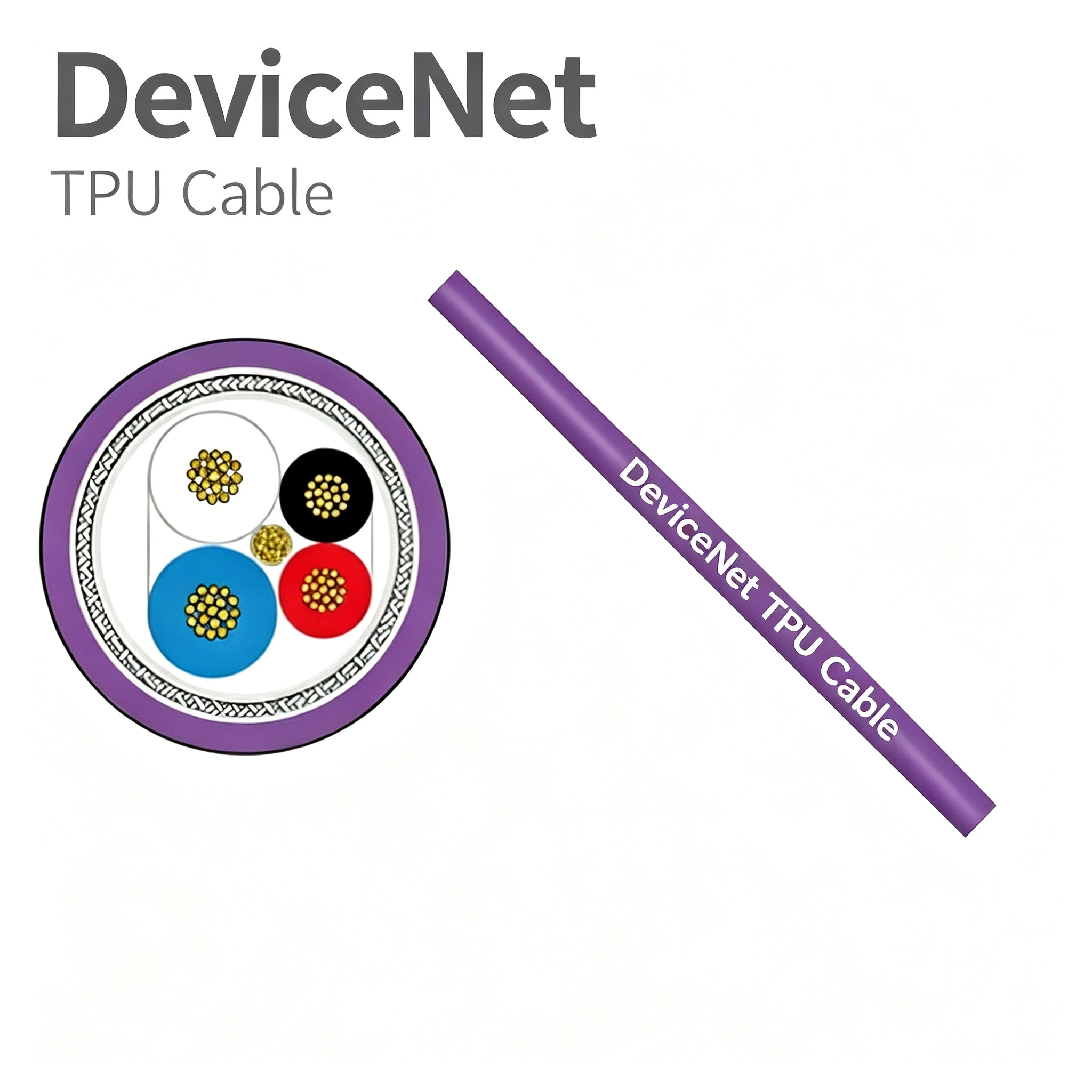
The DeviceNet TPU cable carries two pairs, and the split of duty between them is plain: one pair of wires transmits data, one pair of wires supplies power. That split is what separates a DeviceNet bus run from a signal run, and the construction follows it - four conductors printed white*blue and red*black, foamed PE insulation, a tinned copper braid over the pairs, an FRNC inner jacket and a purple TPU outer jacket at RAL 4005. The item is a DeviceNet fieldbus cable used for the connection of industrial equipment: a low-cost network connection with an open network standard, rated for fixed installation or occasional movement. Characteristic impedance is 120 ±12 Ω from 1 to 10 MHz, rated voltage is 300 V and the test level is 1000 V/min (AC); flame retardancy meets IEC 60332-1, and the cable has good resistance to external electromagnetic interference.
Typical Applications
The application range is a set of duties rather than a device list - it names the network and the duty, not the instruments at the end of the cable. The four below are those duties.
Why Choose the DeviceNet TPU Cable
One Pair for Data, One Pair for Power
The two pairs are defined by duty: one transmits data and one supplies power, and the four conductors are printed white*blue and red*black in those pairs. That is what lets a segment be specified as a bus cable rather than as a four-core cable that happens to be shielded - the run carries signal and supply on one cable and does not need a second feed beside it.
Two Jackets, and a Braid-Only Shield
FRNC inside and TPU outside, each given its own column in the schedule so neither layer is left to be assumed; the shield is a tinned copper braid on its own, with no aluminium foil and no separate drain wire, which gives the cable good resistance to external electromagnetic interference.
Frequently Asked Questions
Q: Which protocol is this cable designed for?
A: DeviceNet. The item is DeviceNet TPU Cable, a DeviceNet fieldbus cable for the connection of industrial equipment; no second protocol is claimed for this range.
Q: What is the characteristic impedance, and over what frequency range?
A: 120 ±12 Ω from 1 to 10 MHz. The figure is one window on one tolerance rather than a value at a single frequency point, so a segment can be checked against it across the whole decade.
Q: How many pairs are there, and what does each pair do?
A: Two pairs. One pair transmits data and the other supplies power - that split is the duty of the cable. The pairs are printed white*blue and red*black, and the schedule gives the construction as two cores per pair, 19 strands each.
Q: Which conductor sizes does the part number cover, and what are the DC resistance limits?
A: 1X2X22AWG/19 and 1X2X24AWG/19 are both printed against the one part number in the specification column. Limits are ≤60 Ω/km for 22 AWG and ≤94.2 Ω/km for 24 AWG - different figures for the same cable, so the size has to be stated on the enquiry.
Q: Is the screen a foil, a braid, or both?
A: A tinned copper braid. This is a braid on its own - there is no aluminium foil on this item, and no separate drain wire in the construction.
Q: What are the jacket materials and the jacket colour?
A: FRNC inner jacket and TPU outer jacket, both given their own columns in the schedule, in purple at RAL 4005. The colour is a fixed figure rather than a finishing choice.
Q: What are the rated voltage and the test voltage?
A: 300 V rated, tested at 1000 V/min (AC). Both are the figures for this item; 1000 V/min (AC) is the test level specified for this construction, and it is quoted as it stands.
Q: What temperature range and bending radius apply?
A: −40 °C to +80 °C. Minimum bending radius is 10 × OD for fixed installation and 15 × OD where the run moves.
Q: Can it be supplied as a finished harness?
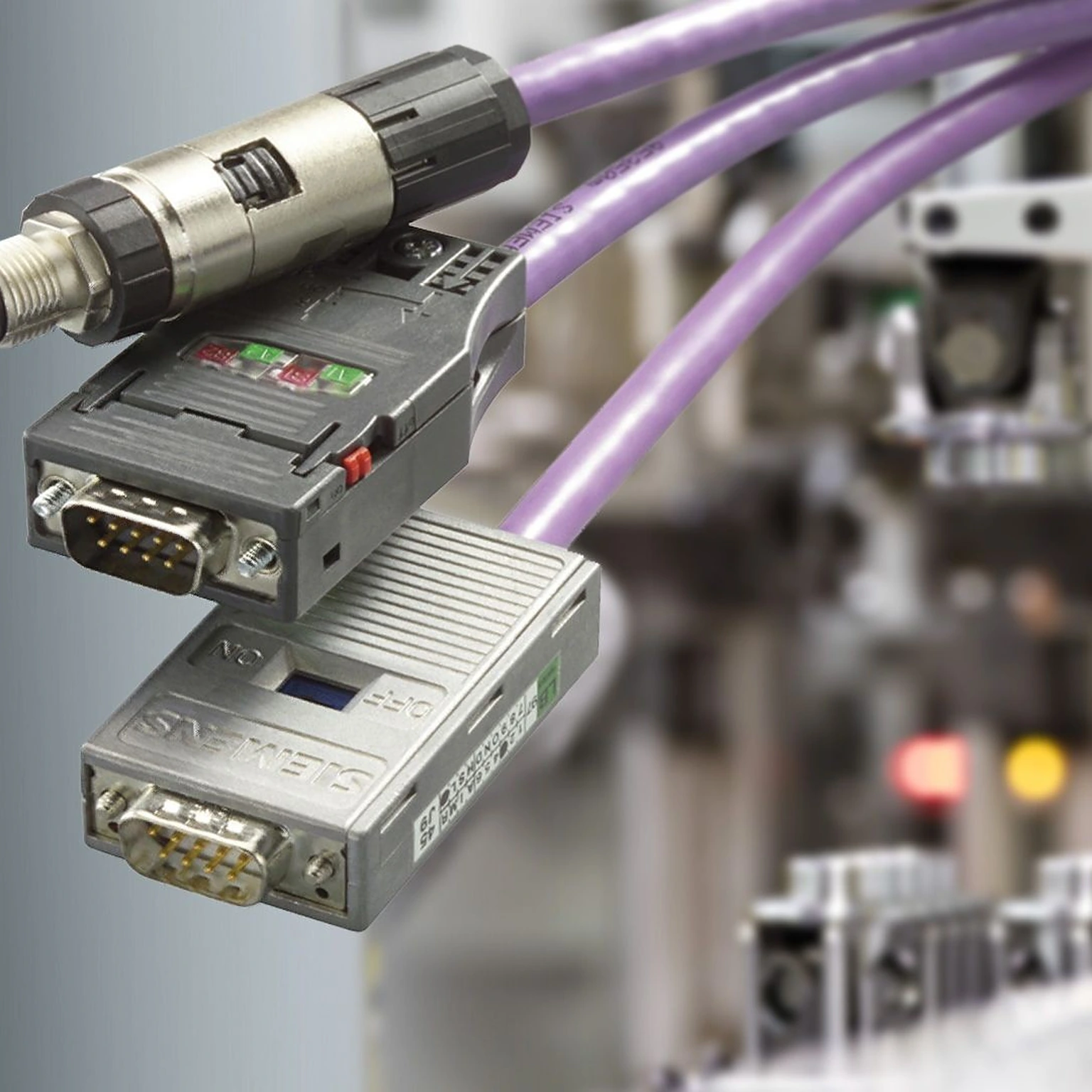
A: Yes, and it is the same cable rather than a look-alike: the item is cut and terminated to the drawing, with a terminal block, a field connector or the customer's own housing as the application requires, and it is quoted together with the cable.
Hot Tags: devicenet cable, China devicenet cable suppliers
Specifications
|
Parameter |
DeviceNet PVC |
DeviceNet TPU |
|
Rated voltage |
300 V |
|
|
Test voltage |
1000 V/min (AC) |
|
|
Characteristic impedance |
120 ± 12 Ω (1–10 MHz) |
|
|
Temperature range |
−40 °C to +80 °C, fixed installation |
|
|
Minimum bending radius - fixed |
15 × OD |
10 × OD |
|
Minimum bending radius - moving |
15 × OD |
|
|
Conductor |
Stranded tinned copper |
|
|
Insulation |
Foamed PE and PVC |
Foamed PE |
|
Core colours |
White*blue and red*black |
|
|
Shield |
Pair shield plus an overall tinned copper braid |
Overall tinned copper braid only, no aluminium foil, no separate drain wire |
|
Inner jacket |
None |
FRNC |
|
Outer jacket |
PVC |
TPU |
|
Jacket colour |
Purple (RAL 4005) |
|
|
Core identification |
≤5 cores by insulation colour; >5 white numbers; or to customer requirement |
|
|
Flame retardancy |
Meets the requirements of IEC 60332-1 |
|
|
Interference and transmission |
Good resistance to external electromagnetic interference; superior transmission performance |
|
|
Duty |
Fixed installation or occasional movement |
|