Xiamen Kabasi Electric Co., Ltd. is one of the most reliable manufacturers and suppliers of cc-link cable in China. If you're going to buy bulk durable cables made in China, welcome to get pricelist from our factory. All customized cables are with high quality and competitive price.
Lead Paragraph
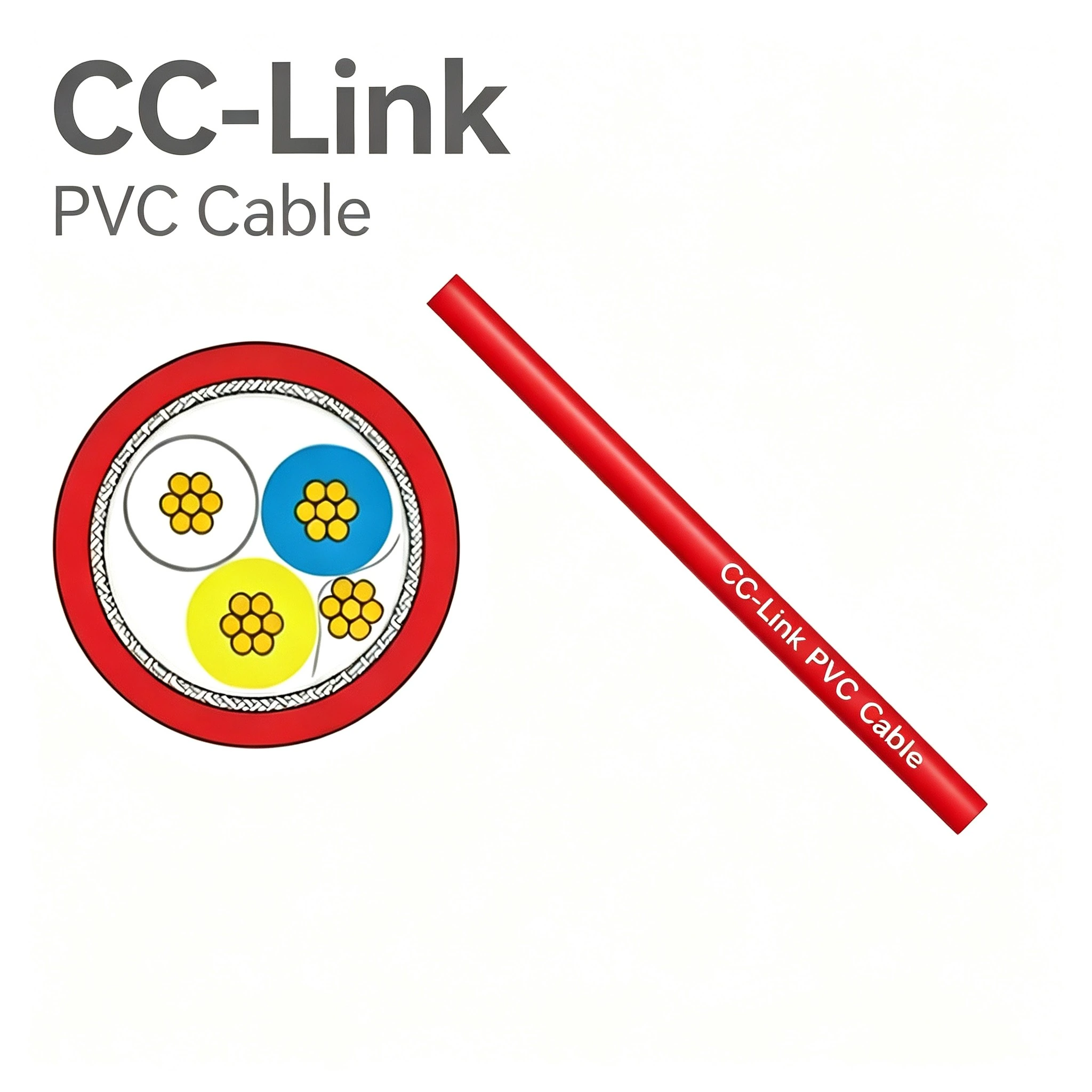
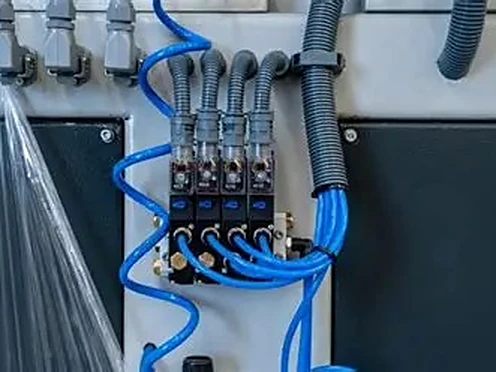
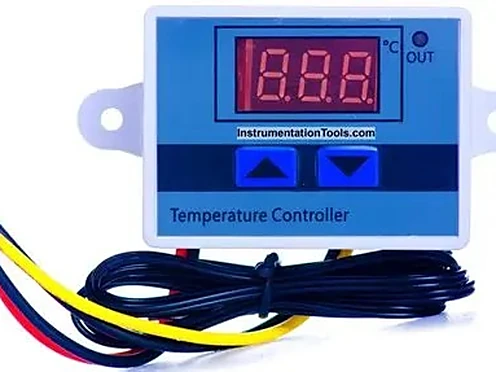
The CC-Link cable is the three-core shielded drop cable offered for CC-Link fieldbus segments, and it is aimed at the far end of a network rather than at the backbone: the range names its duty as the direct connection of flowmeters, solenoid valves, temperature controllers and other field equipment. The construction is sized for that job. Three 20 AWG conductors stranded seven ways are insulated in foamed PE and identified white, blue and yellow, and a separate 22 AWG ground wire travels inside the same jacket. A screen of aluminium foil plus tinned copper braid wraps the cores, characteristic impedance is rated at two frequencies, 110 ±15 Ω at 1 MHz and 100 ±6 Ω at 5 MHz, and the assembly closes in a red PVC jacket at RAL 3000. Rated voltage is 300 V and the test level is 500 V/min AC, minimum insulation resistance is specified as 5000 MΩ·km, and the flame retardancy and interference claims are the standard pair: IEC 60332-1, and good resistance to external electromagnetic interference.
Impedance Rated at Two Frequencies, Not as One Band
Impedance is where this range separates itself from the wider bus-cable family. Most shielded bus cable is specified against a single window; this one is rated at two discrete points, 110 ±15 Ω at 1 MHz and 100 ±6 Ω at 5 MHz. Read together the two figures describe a curve that falls as frequency rises, and both are given with their own tolerance, so a segment can be checked against the network at each frequency rather than against an averaged claim.
Typical Applications
Why Specify UL1015
Sized for the Device End, Not the Backbone
A 20 AWG three-core construction says what the cable is for before any figure is quoted. It is a drop cable: short runs, frequent terminations, tight routing inside a machine or a skid. Where a network backbone is specified on reach and on how much traffic it must carry, this item is specified on whether it lands cleanly on a terminal at the device. That is the duty the range serves it against, and the schedule is quoted on that basis.
The Reference Conductor Is Inside the Jacket
The ground wire is 22 AWG and it is listed in the part-number schedule as its own column, which makes it a property of the cable rather than an accessory. For a device drop, that is the difference between a length that terminates in one operation and a length that needs a second conductor pulled to the same point.
A Jacket Colour That Reads as a Bus on a Dense Route
The outer jacket is PVC and the colour is specified as red, RAL 3000. The colour is data rather than decoration: on a panel or a machine skid crowded with power and control cable, a jacket colour is how a bus run is identified at a glance, and RAL 3000 is the reference the range states for this item.
Frequently Asked Questions
Q: What is the characteristic impedance at each stated frequency?
A: 110 ±15 Ω at 1 MHz and 100 ±6 Ω at 5 MHz. Both are printed with their own tolerance, so a segment should be checked at each frequency rather than against a single averaged figure.
Q: Is the screen aluminium foil, braid, or both?
A: Both, in the same wrap. The construction lists the screen as aluminium foil with a tinned copper braid over it, and it is the element credited with the cable's ability to resist external electromagnetic interference. The construction lists no separate drain wire.
Q: What are the rated voltage and the test voltage?
A: 300 V rated, tested at 500 V/min (AC). The 500 V test level is the figure the range states for this item; it is lower than the 2000 V/min level specified for some other bus cables in the range, so the figure should be quoted exactly as specified rather than carried over from a neighbouring page.
Q: What temperature range and bending radius apply?
A: −40 °C to +80 °C. Minimum bending radius is 10 × OD for fixed installation and 15 × OD where the run moves.
Q: What is the minimum insulation resistance?
A: 5000 MΩ·km. It is a separate figure from the conductor DC resistance, which is ≤40 Ω/km at 20 °C, and the two are quoted against their own parameters in the tables below.
Q: Can it be supplied as a finished harness?
A: Yes. The same cable is assembled to the drawing with the termination the application calls for - a terminal block, a device connector or the customer's own housing - and the cable and the assembly are quoted in one document.
Hot Tags: cc-link cable, China cc-link cable suppliers
Electrical and Transmission Ratings
| Parameter | Value |
| Rated voltage | 300 V |
| Test voltage | 500 V/min (AC) |
| Characteristic impedance | 110 ±15 Ω (1 MHz); 100 ±6 Ω (5 MHz) |
| Conductor DC resistance (20 °C) | ≤40 Ω/km |
| Minimum insulation resistance | 5000 MΩ·km |
| Flame retardancy | Meets the requirements of IEC 60332-1 |
| Interference and transmission | Stated as good resistance to external electromagnetic interference, with superior transmission performance |
Product Structure
| Layer | CC-Link Cable |
| Conductor | Stranded copper, 20 AWG stranded 7 ways |
| Insulation | Foamed PE |
| Core colours | White, blue and yellow |
| Screen | Aluminium foil with tinned copper braid |
| Ground wire | 22 AWG, carried inside the jacket |
| Outer jacket | PVC |
| Jacket colour | Red (RAL 3000) |