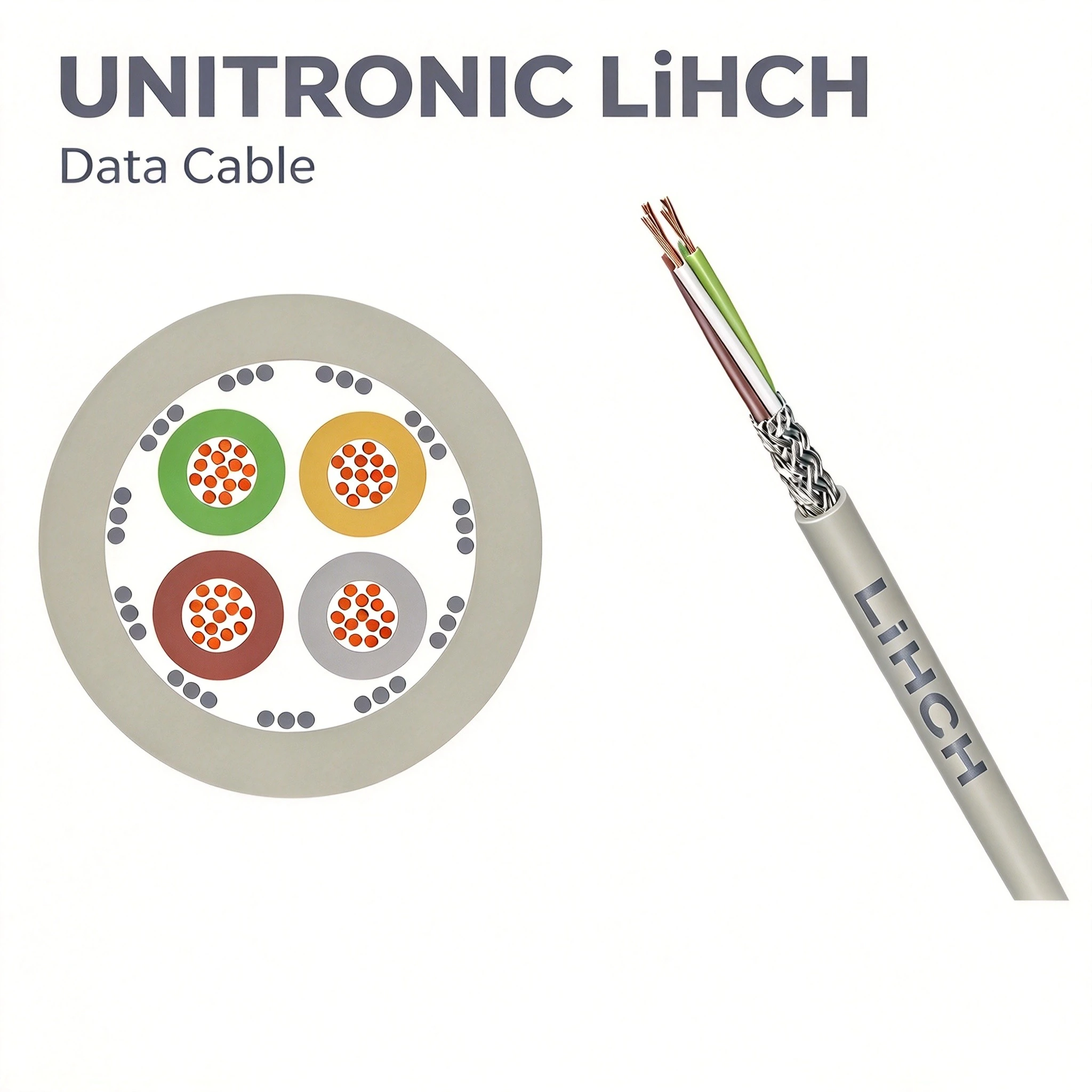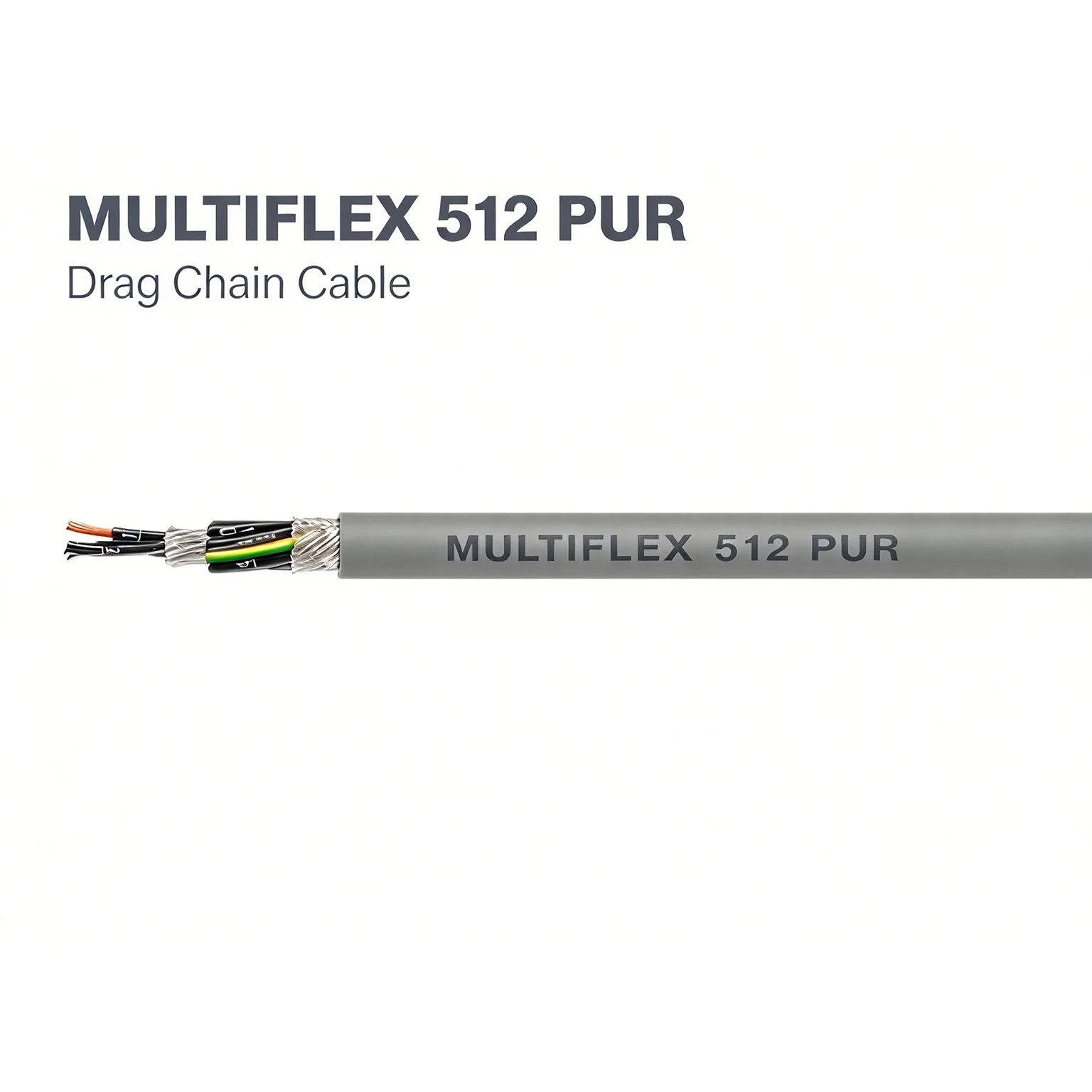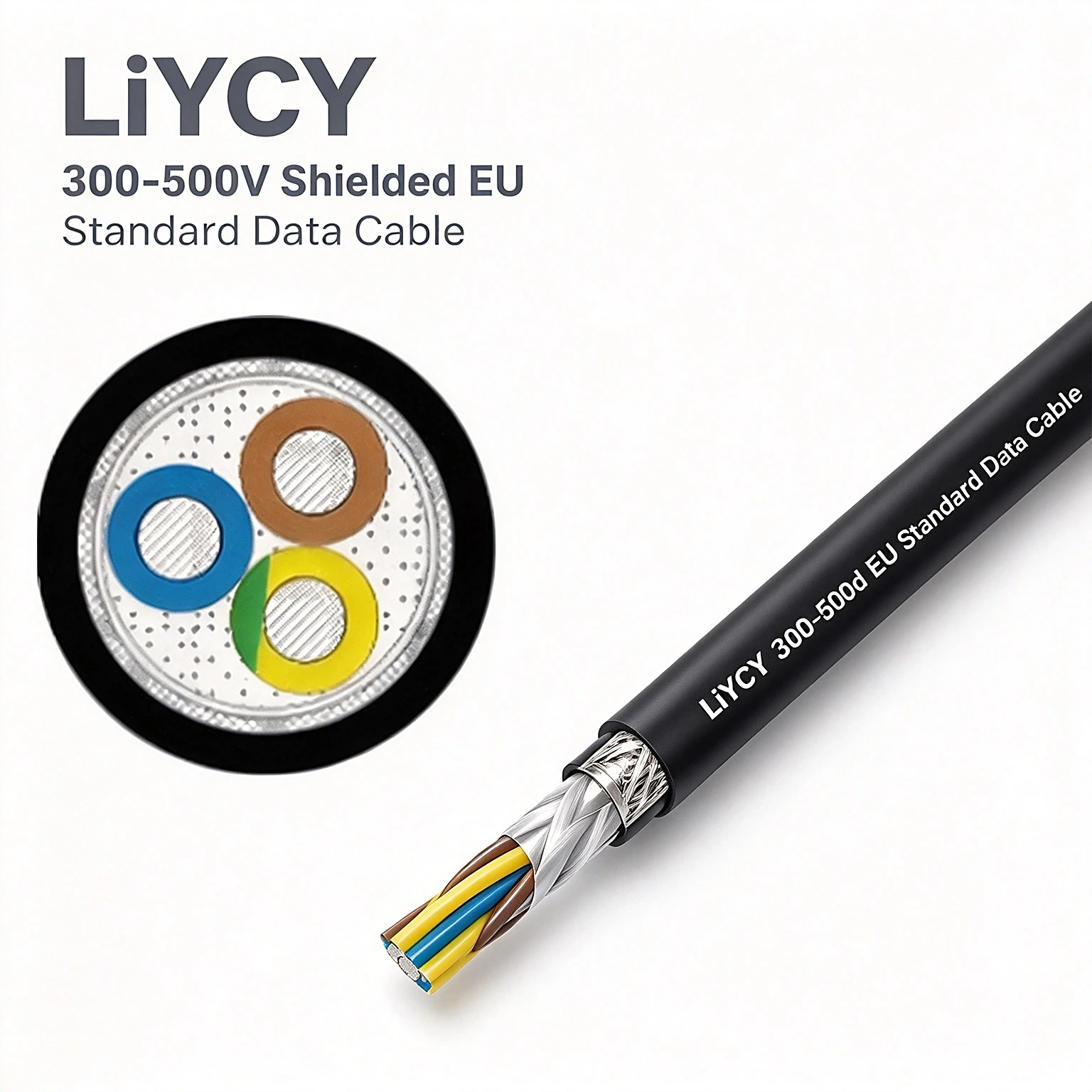
Xiamen Kabasi Electric Co., Ltd. is one of the most reliable manufacturers and suppliers of liycy 300/500 v shielded eu standard data cable in China. If you're going to buy bulk durable cables made in China, welcome to get pricelist from our factory. All customized cables are with high quality and competitive price.
Lead Paragraph
LiYCY is the screened PVC data cable the trade orders as a liycy cable or liycy kabel. It shares the conductor, insulation and sheath of the unscreened data builds and adds two layers they do not carry: a polyester tape and a tinned copper braid. The braid is the screen a liycy shielded cable is bought for, and the tape holds it in shape and keeps it off the insulated cores. The second difference is the rating: LiYCY is declared at 300/500 V U₀/U, one step above the 300 V of the unscreened builds. It serves tool manufacturing, the machine-tool industry, electrical engineering, computers and measuring and control technology, and its very small overall diameter also makes the smaller sizes suitable for miniature plugs. Fixed installation takes a 6 × outer diameter bend radius over −10 °C to +80 °C and moving installation 13 × outer diameter over −5 °C to +80 °C, and cores and sheath are produced to the customer's colour requirement.
What the Braid and the 300/500 V Rating Change
The braid is the reason this build is ordered. A tinned copper braid laid over the polyester tape puts a conductive layer between the cores and the outside world, while the tape holds the braid in place and separates it from the insulated cores - so the screen does not sit against the insulation and does not spread when the cable is stripped. Because the braid strands are tinned they resist oxidation and take solder at the termination, which is what the gland end and the terminal block ask for.
The rating follows the same logic: 300/500 V is one step above the 300 V of the unscreened data builds, so the screened build can be used where the drawing specifies the higher rating. Everything else follows the unscreened family: the same conductor, PVC TI2 insulation and PVC TM2 sheath, and the same installation limits. One property matters in the other direction - the very small overall diameter is what makes the smaller sizes suitable for miniature plugs.
Typical Applications
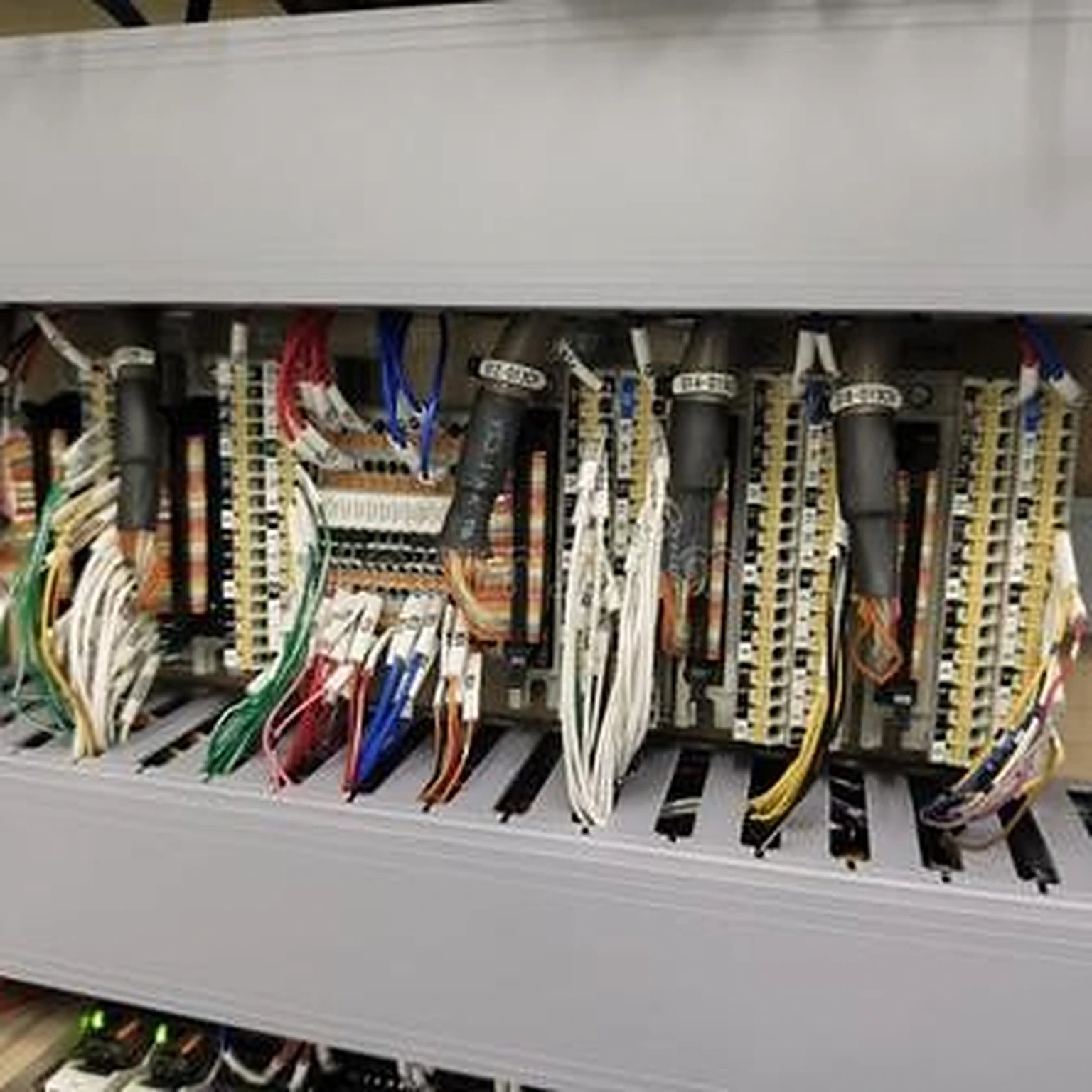
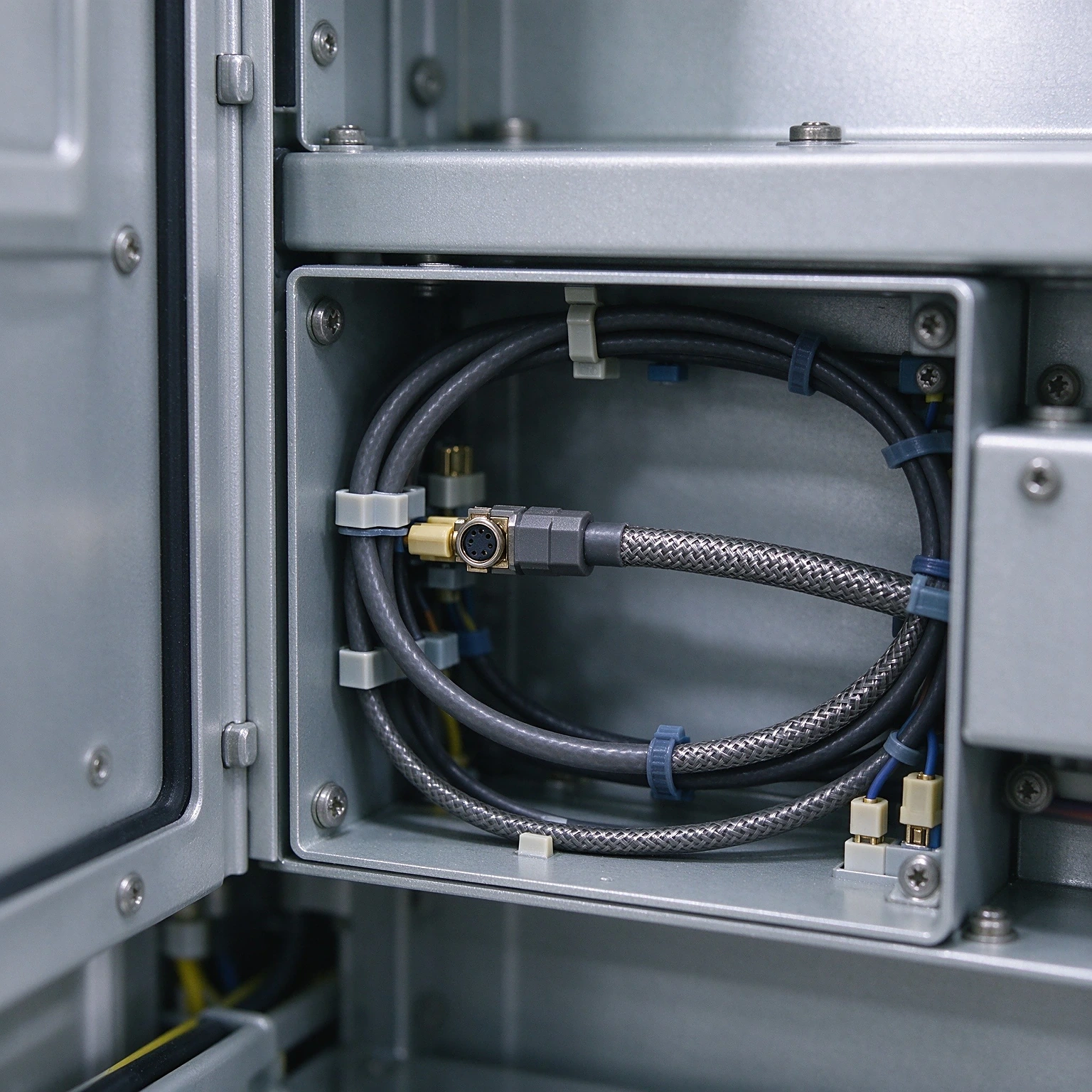
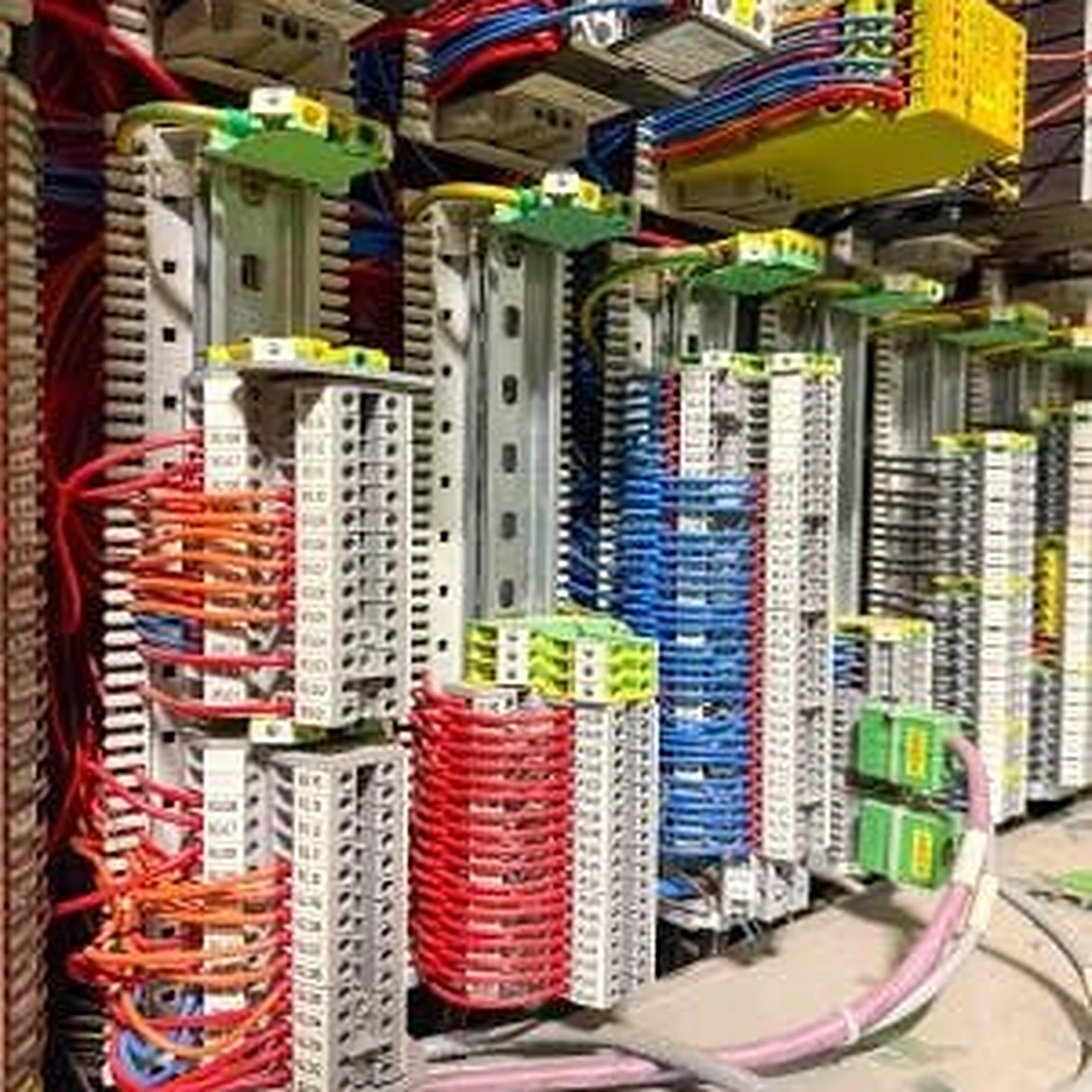
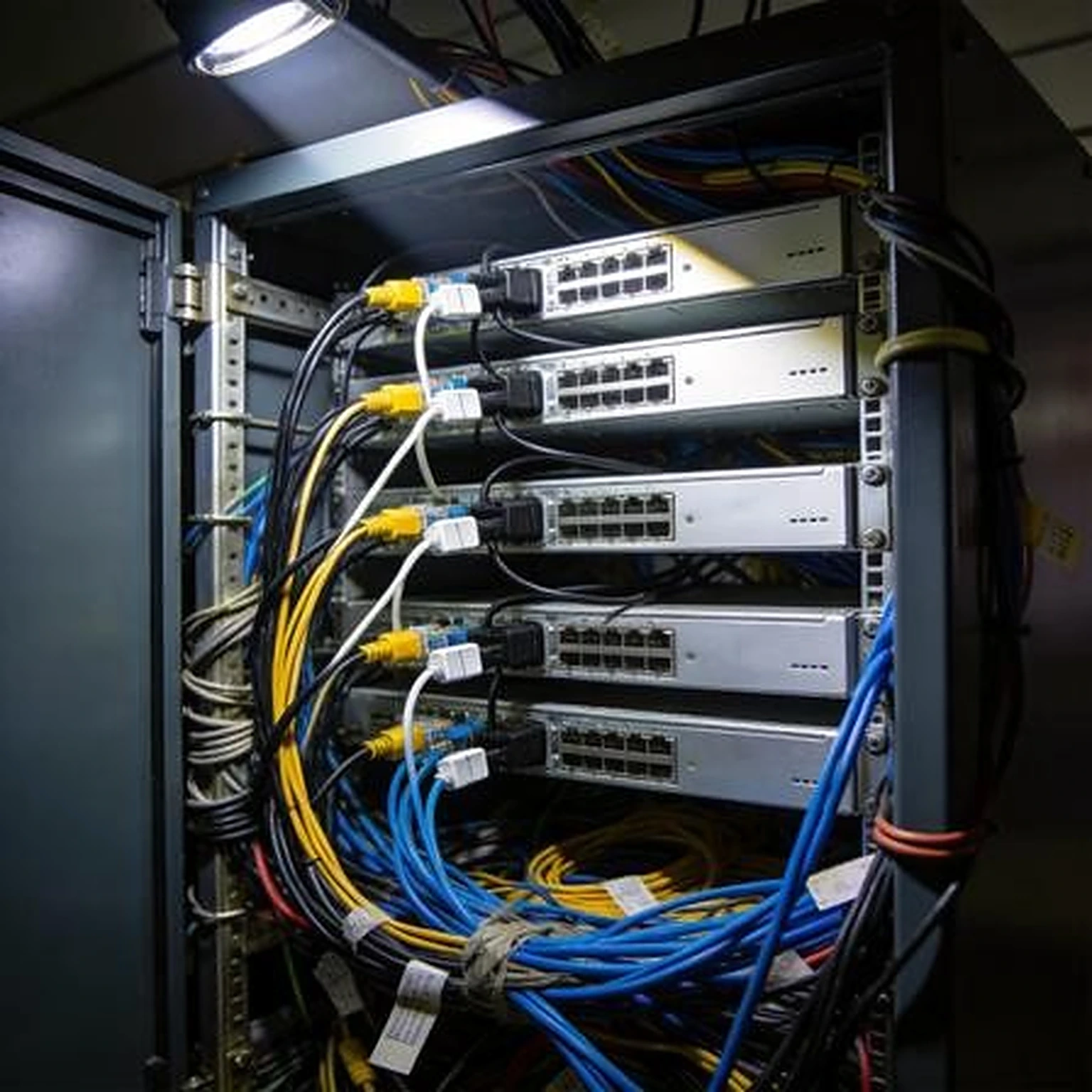
Four routes carry this build: panels and enclosures in tool-making and machine-tool plants, computer and electrical systems, measuring and control circuits, and the small sizes that terminate in miniature plugs.
Why Specify LiYCY
Tinned copper in the braid, not plain copper
The braid strands are tinned, so they resist oxidation and take solder at the termination - which is what a screened data cable needs at the gland and at the terminal block.
01
A polyester tape under the braid
The tape separates the screen from the insulated cores and holds the braid in place, so the screen does not sit against the insulation and does not spread when the cable is stripped.
02
300/500 V rather than 300 V
The screened build is declared one step above the unscreened data builds, so it can be used where the drawing specifies 300/500 V rather than 300 V.
03
Very small overall diameters, which reach miniature plugs
The smaller sizes of the construction are the ones specified where a screened cable has to be terminated in a confined connector space.
04
Flame retardant to IEC 60332.1, with chemical performance declared at the outset
Flame propagation is verified by test rather than left as an unspecified property, and good chemical resistance is declared for the range - resistance to oil, cold, acid, alkali and solvent is available as an option and is named on the enquiry where a route passes through a wash-down or fluid contact area.
05
Frequently Asked Questions
Q: What does the screen consist of?
A: A tinned copper braid over a polyester tape. There is no aluminium foil layer on this construction: the tape separates the braid from the insulated cores and holds it in place.
Q: What is the rated voltage?
A: 300/500 V U₀/U, one step above the 300 V of the unscreened data builds, with a maximum conductor operating temperature of 80 °C.
Q: What is the minimum bend radius and ambient range?
A: Fixed installation takes 6 × outer diameter over −10 °C to +80 °C; moving installation takes 13 × outer diameter over −5 °C to +80 °C.
Q: Why is the braid tinned rather than plain copper?
A: Tinned strands resist oxidation and take solder at the termination, which is what the gland end and the terminal block ask for.
Q: Is the cable suitable for miniature plugs?
A: Its very small overall diameter makes the smaller sizes suitable for miniature plugs, and those sizes are the ones specified where a screened cable has to be terminated in a confined connector space.
Q: How does a liycy cable differ from a liyy cable?
A: By the screen and the rating. LiYY carries no braid and is rated 300 V; LiYCY adds a tinned copper braid over a polyester tape and is declared at 300/500 V.
Q: What is the liycy cable meaning, and where does the short form come from?
A: The letters are built from the materials: Li for the flexible stranded copper conductor, the first Y for the PVC insulation, C for the copper braid screen and the final Y for the PVC sheath. That is where the liycy cable full form comes from, and why the German trade writes it as liycy kabel.
Q: How do I specify the size?
A: By core count and conductor cross-section together - the two figures a datasheet enquiry turns on, and the two axes the schedule is organised on. Core colours and compounds are made to order, so a part number fixes one colour and any other colour or compound is agreed at the order. Metric cross-sections are the primary figure; any imperial equivalent is a nearest-area conversion and is not interchangeable with a cable specified in AWG.
Requesting LiYCY Cable and Finished Harnesses
LiYCY is supplied cut to length against the drawing, and the same cable can be delivered as a finished harness for lines that would prefer terminated assemblies to coils. State the conductor cross-section and the core count, since the schedule is organised on those two axes, together with the packing format where the length is to arrive coiled or on a drum. Cable and assembly are quoted together rather than as two transactions.
Hot Tags: liycy 300/500 v shielded eu standard data cable, China liycy 300/500 v shielded eu standard data cable suppliers
Ratings, Ambient Limits and Flame Behaviour
| Parameter |
Rating |
| Rated voltage U0/U | 300/500 V |
| Maximum conductor operating temperature | 80 °C |
| Ambient temperature, fixed installation | −10 °C to +80 °C |
| Ambient temperature, moving installation | −5 °C to +80 °C |
| Flame retardancy | Tested to IEC 60332.1 |
| Chemical resistance | Good chemical resistance; resistance to oil, cold, acid, alkali and solvent is available as an option |
| Cutting and stripping | Insulation thickness held to DIN VDE 0281; cable cuts and strips easily |
| Reference standards | UL758 and DIN VDE 0281; conductor to DIN VDE 0295 cl.5 / IEC 60228 cl.5 |
Layer-by-Layer Construction
| Element | Material | Note |
|
Conductor |
Bare soft copper | To DIN VDE 0295 cl.5 / IEC 60228 cl.5 |
|
Insulation |
PVC TI2 polyvinyl chloride | Insulation thickness held to DIN VDE 0281; cuts and strips easily |
| Tape | Polyester tape | Separates the braid from the insulated cores |
| Screen | Tinned copper braid | Tinned strands take solder at the termination |
| Sheath | PVC TM2 polyvinyl chloride | Outer sheath |
| Core and jacket colour | Produced to the customer's colour requirement | Produced to order |
| Insulation and sheath material | Alternative grades to the customer's requirement | Produced to order |
Installation Reference
| Installation | Minimum bend radius | Ambient temperature range |
| Fixed installation | 6 x outer diameter | −10 °C to +80 °C |
| Moving installation | 13 x outer diameter | −5 °C to +80 °C |