Xiamen Kabasi Electric Co., Ltd. is one of the most reliable manufacturers and suppliers of yslycy - shielded double-sheath control cable in China. If you're going to buy bulk durable cables made in China, welcome to get pricelist from our factory. All customized cables are with high quality and competitive price.
Lead Paragraph
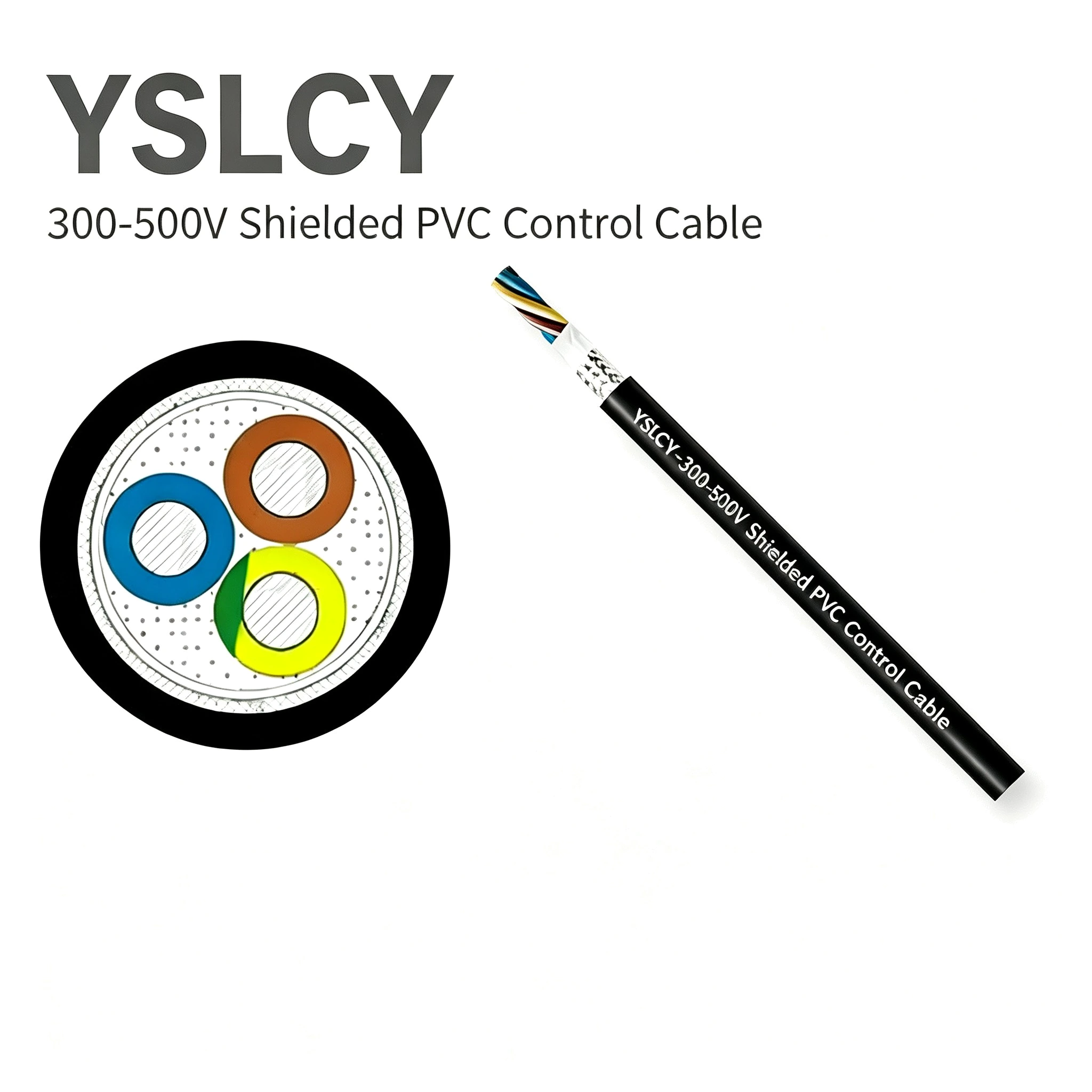
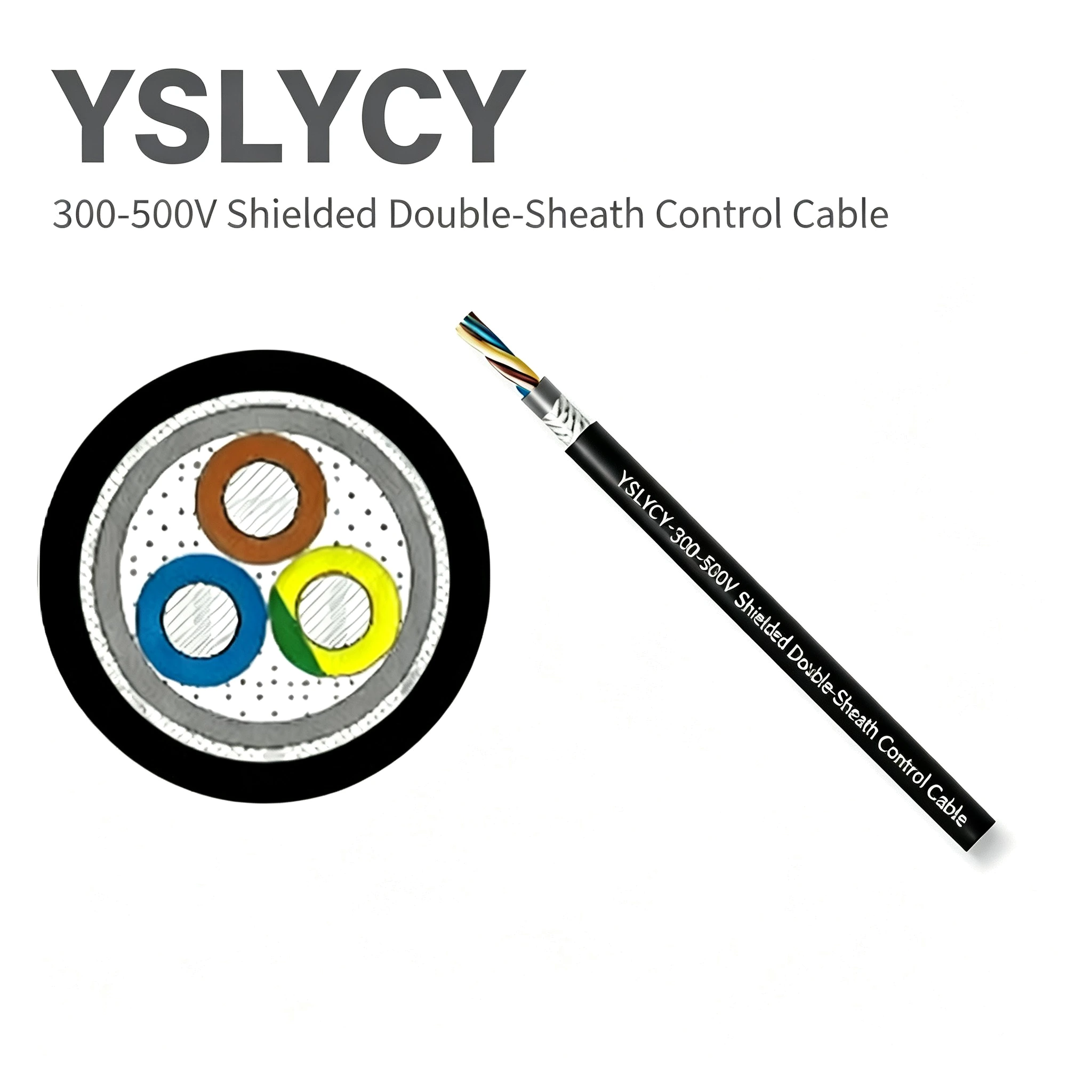
YSLYCY control cable is the double-sheath screened build of the PVC control range. It starts from the same basis as the single-sheath cy construction - bare flexible stranded copper to GB/T 3956, PVC/D insulation, a tinned copper braid and a PVC/ST9 outer sheath, rated 300/500 V at a 70 °C conductor - and changes one thing: a PVC/ST5 inner sheath is extruded over the cores before the braid is laid. The braid therefore sits between two extruded layers instead of between a tape and a sheath, and the screen is protected on both faces.
Two Sheaths, One Screen
The construction is best read as a cable inside a cable. Core assembly, then the ST5 inner sheath, which is a full extruded wall rather than a wrap; then the braid; then the ST9 outer sheath. Each sheath has one job. The inner one holds the braid on a true cylinder and keeps every braid wire away from the insulation for the whole length, including the short section that gets flexed at a gland. The outer one takes abrasion, oil and wash-down, so the braid does not have to.
The practical result appears at the cut end. Strip the outer sheath, and the braid is still a tube sitting on a solid wall: it can be pushed back, trimmed and clamped without collapsing onto the cores, and the ST5 wall underneath protects the insulation while the braid is dressed. On a single-sheath build that operation is done over a thin tape, which is quicker but less forgiving.
Typical Applications
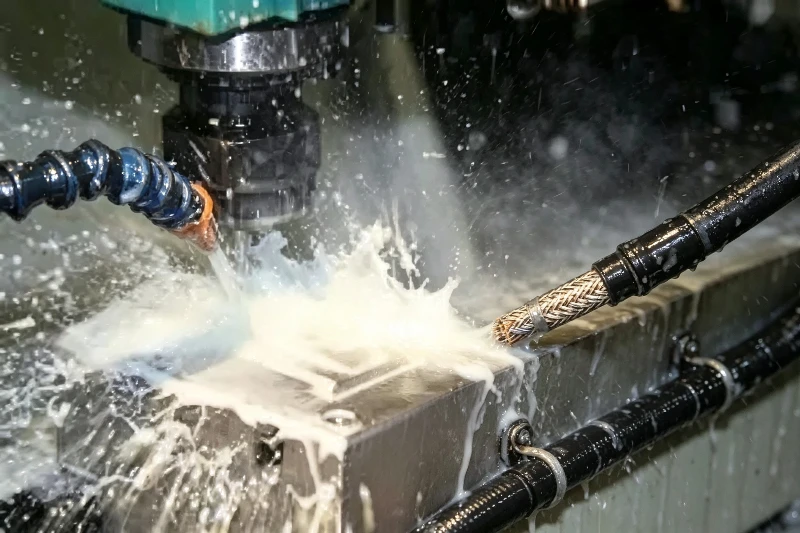
Cutting fluid, coolant mist and wash-down
The outer ST9 wall is the only layer that has to survive, so the sheath takes the whole chemical duty and the braid stays as laid.
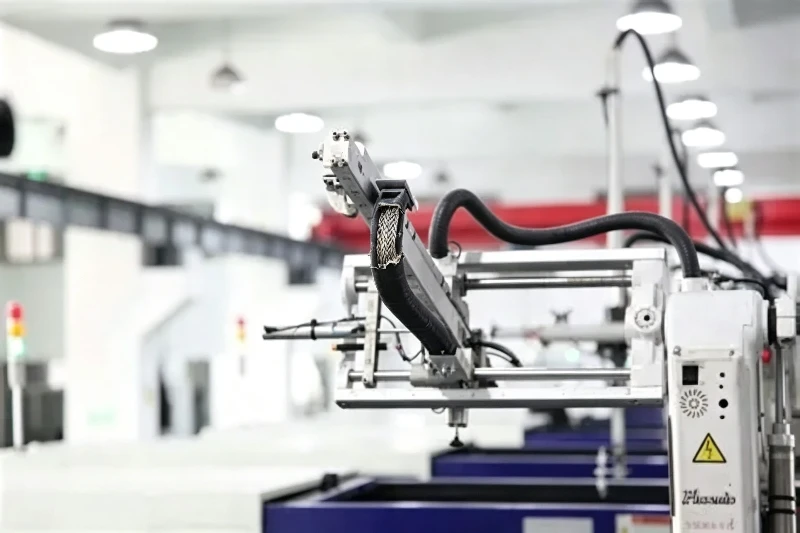
A run pulled through a duct or a chain guide
Abrasion would otherwise reach the braid; here it stops at the outer sheath, which is the layer that can be replaced by simply ordering a longer length.
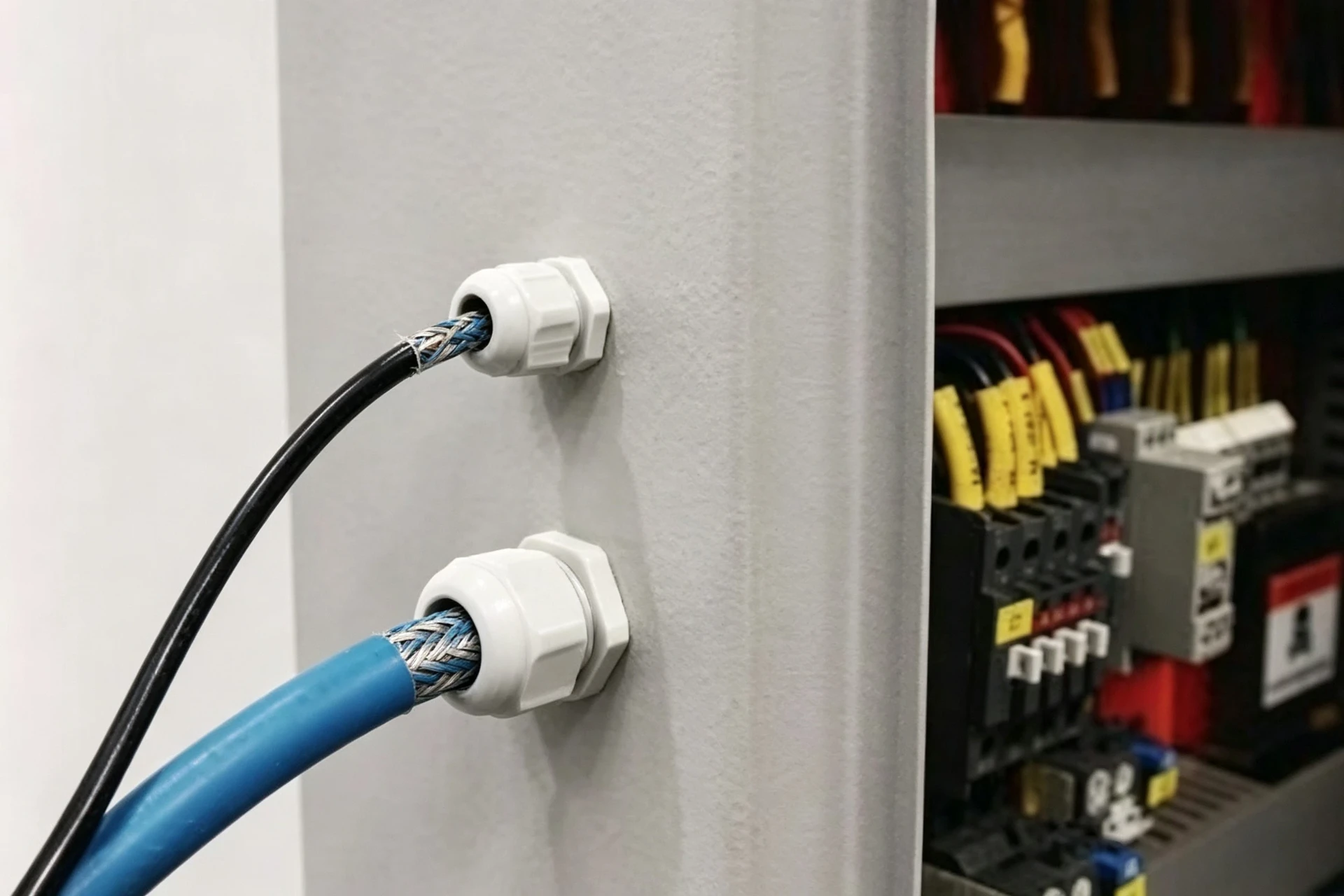
Several re-terminations on the same braid
The inner sheath holds the braid geometry intact each time, so the screen is still serviceable after the gland has been remade
The Trade-Off: One More Wall of Diameter
The inner sheath is a wall, and a wall costs diameter. That is the trade the double-sheath build asks for: the braid is protected on both faces, the outer sheath takes abrasion and wash-down, and the cable is larger at a given core count than the single-sheath version. Where the requirement is screening alone, the single-sheath build covers it at the smaller diameter; where the requirement is continuous bending, neither screened build applies and the unscreened construction takes the route.
Three Compounds, Declared One by One
Three different compounds appear in this build: PVC/D on the cores, PVC/ST5 as the inner sheath and PVC/ST9 as the outer sheath. They are stated separately in the structure table rather than rolled into one line, because a drawing that has to name the compound at each layer needs all three, and because the choice of each is checked against the environment the cable runs in.
Frequently Asked Questions
Q: What is the difference between YSLYCY and YSLCY?
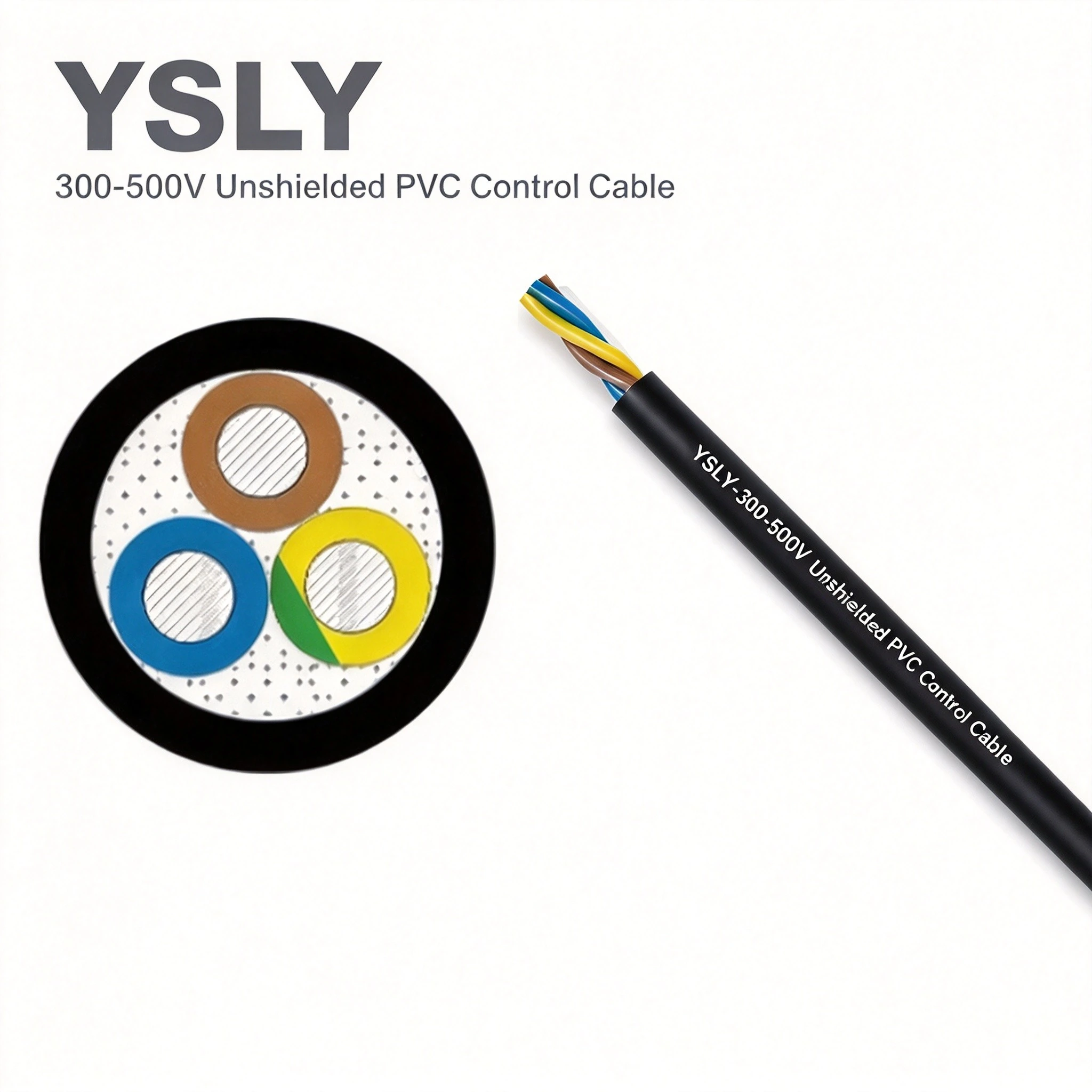
A: The layer under the braid. YSLCY winds a polyester tape over the cores and closes with a single PVC/ST9 sheath; YSLYCY extrudes a PVC/ST5 inner sheath there and closes with the PVC/ST9 outer sheath, so the braid is enclosed between two sheaths. Voltage, conductor temperature, ambient range and bend radii are identical.
Q: When is the double sheath worth specifying?
A: Where the braid has to survive abrasion, wash-down or repeated re-termination. If the route only needs screening, the single-sheath build does the same electrical job at a smaller diameter.
Q: Can this cable be used where the run moves?
A: For occasional movement. As with any screened control cable, continuous bending is not recommended; machine tools and grinding machines are the duty, drag chains are not.
Q: Is the screen a foil or a braid?
A: A tinned copper braid, with no aluminium foil layer. The two layers around it are both extruded PVC compounds, ST5 inside and ST9 outside.
Q: Can it be connected directly to a power line?
A: Yes. The screened range allows direct connection to a power line, so one route can carry supply and control wiring together.
Q: What are the bend radius and the ambient range?
A: Fixed installation takes 6 x outer diameter at -10 to +70 °C; moving installation 13 x outer diameter at -5 to +70 °C; maximum conductor operating temperature 70 °C.
Hot Tags: yslycy - shielded double-sheath control cable, China yslycy - shielded double-sheath control cable suppliers
Electrical, Thermal and Fire Ratings
| Parameter | Rating |
| Rated voltage U0/U | 300/500 V |
| Maximum conductor operating temperature | 70 °C |
| Ambient temperature, fixed installation | -10 to +70 °C |
| Ambient temperature, moving installation | -5 to +70 °C |
| Minimum bend radius, fixed | 6 x outer diameter |
| Minimum bend radius, moving | 13 x outer diameter |
| Screen | Tinned copper braid between two PVC sheaths |
| Continuous bending | Not recommended |
| Flame retardancy | Tested to GB/T 18380.12 |
| Reference standards | HD 21.13 and GB/T 5023; conductor to GB/T 3956 |
Construction
| Element | Material | Note |
| Conductor | Bare flexible stranded copper | To GB/T 3956 |
| Insulation | PVC/D | Declared to GB/T 5023 |
| Inner sheath | PVC/ST5 | Extruded wall under the braid; declared to GB/T 5023 |
| Screen | Tinned copper braid | Enclosed on both faces |
| Outer sheath | PVC/ST9 | Declared to GB/T 5023; colour and compound to order |
Installation Reference
| Installation | Minimum bend radius | Ambient temperature range |
| Fixed installation | 6 x outer diameter | -10 to +70 °C |
| Moving installation | 13 x outer diameter | -5 to +70 °C |